992 Collection
991 Collection
718 Collection
Wheels
Accessories


Carbon fibre does not need special treatment. It needs the treatment you would give good paint, which is more than most cars get. The fibres themselves are close to indestructible in normal use. Everything that goes wrong happens in the lacquer sitting on top of them.
That single fact explains every piece of advice below. Cloudy carbon, yellowed carbon, hazy carbon: all of it is a coating problem, not a material problem, and most of it is reversible.
Rinse first with clean water to lift grit, then hand wash with a pH-neutral shampoo and a soft microfibre mitt. Rinse again, and dry with a blower or a soft drying towel rather than letting it air dry. Work on a cool panel in the shade. That is the whole routine, and it is the same one good paint wants.
The rinse before contact is the part people skip. Dragging a mitt across a dusty panel is how swirl marks get put into a clear coat, and on carbon those swirls scatter light across the weave and dull the whole surface.
Harsh degreasers and brush-type car washes are the two things to keep away from carbon. An automatic wash with rotating brushes will mar a lacquered panel faster than a year of driving will.
For road film, mild iron removers or tar cleaners are fine. Rinse thoroughly afterwards so nothing is left to stain.
Sunlight attacks the clear coat and the resin. It does not attack the fibres.
The visible sequence is predictable. The lacquer oxidises at the surface, which reads as cloudiness. Left longer, the resin underneath begins to discolour, which reads as yellowing. Left longer still, the lacquer can micro-crack and lift.
Which is why finish quality decides how a part looks in five years far more than the material headline does. A properly lacquered part with UV inhibitors in the coating holds up. A thin gel coat on a budget part does not.
Parking in shade helps. So does a cover on a car that lives outside. Neither is exotic advice, and both do more than any product you can buy.
Yes, if the part matters to you. A ceramic coating adds a harder sacrificial layer than wax and carries UV inhibitors, which is exactly the protection a lacquered carbon panel wants. Wax or a synthetic sealant is the cheaper route and still helps. Paint protection film is the option for parts that take stone chips.
Order matters. Decontaminate and polish before coating, because a coating locks in whatever defects are underneath it.
Film rather than coating on the parts that get hit. Front lips, splitters and the leading edge of side skirts live in the stone chip zone, and no coating stops a chip.
One exception worth flagging. Matte and bare carbon finishes should not be polished, and they need matte-specific products. Polishing a matte surface makes it patchy, and the fix is a refinish.
Usually, yes. If the lacquer is intact and has simply oxidised, polishing removes the dead surface layer and restores clarity. If the yellowing has reached the resin underneath, the part needs re-clearing, which is a bodyshop job rather than a weekend one.
The test is whether the lacquer has peeled or cracked. Intact but dull is a polishing problem. Lifting at an edge is a refinishing problem.
Machine polish with a fine finishing polish and a soft pad, work in small sections, and keep the heat down. Excessive heat affects the resin bond, which is a much bigger problem than the haze you started with.
If you have not done it before, pay someone. A carbon panel has a thinner lacquer film than a painted one, and going through it is not recoverable at home.
Not much, because you are looking after the coating in both cases. Both are cloth and resin. The difference is that fibreglass parts are more often finished in gel coat than automotive lacquer, and gel coat chalks and fades faster in UV.
The other difference shows up under a stone chip. Chip a carbon panel and you see black weave. Chip a fibreglass panel finished to look like carbon and you see white or grey underneath, which is the moment a lot of people find out what they bought.
Automatic car washes with brushes. Harsh solvents and strong degreasers on a lacquered panel. Polishing a matte or bare finish. Coating over defects instead of correcting them first. And leaving a car parked flat to the sun all summer with nothing on the carbon at all.
None of it is complicated. Wash it like paint, protect it once a year, keep it out of brush washes, and a carbon part will outlast several sets of tyres without changing.
Everything we build is autoclave-cured pre-preg carbon, hand-made in the UK, and shipped in a durable clear lacquer chosen for UV stability. Parts in stock go out quickly, and parts built to order are dispatched within 14 to 35 days.
If you are starting from scratch, the 992.1 mini ducktail is where most owners begin.
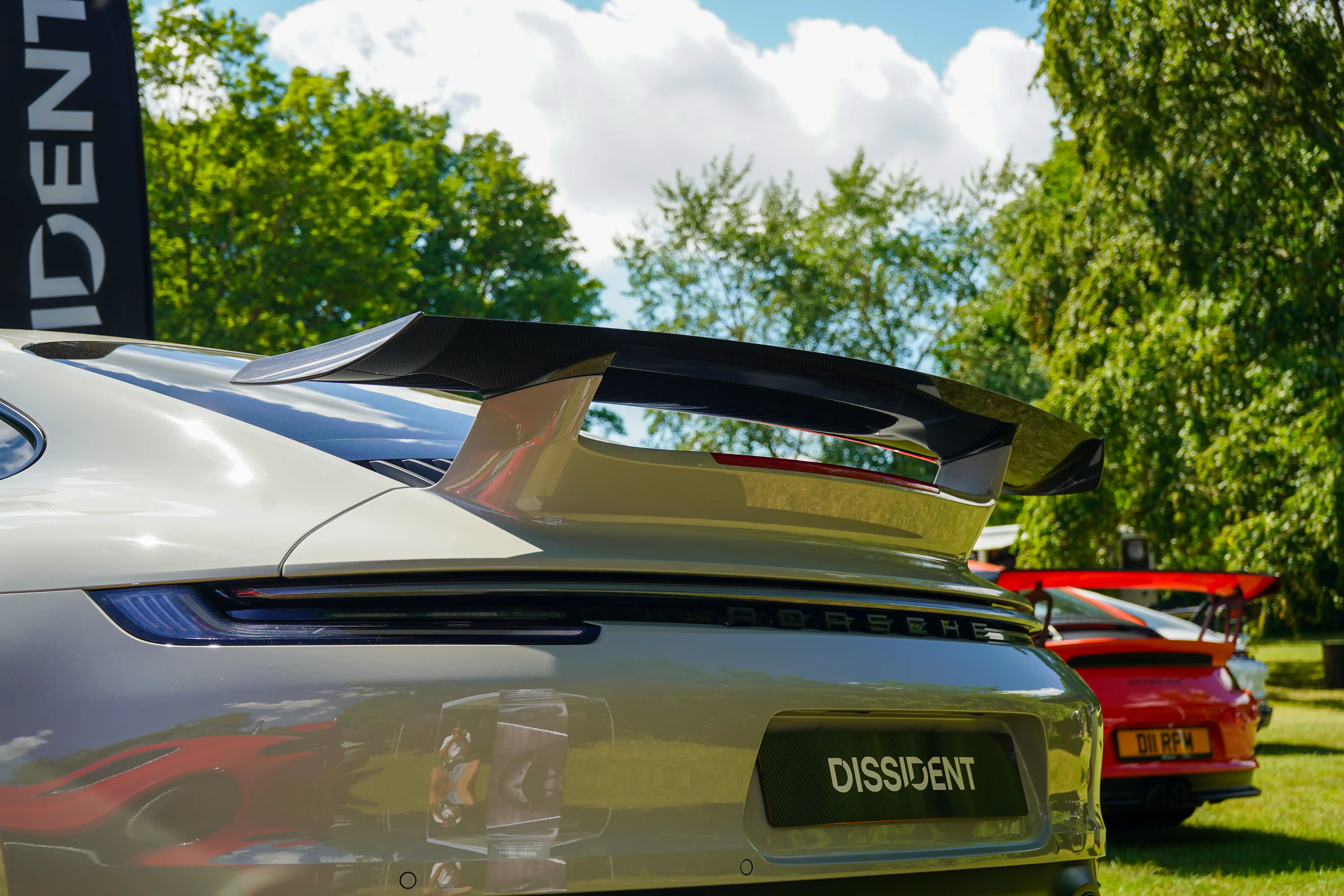
A GT wing works the air above the car, a ducktail changes where it leaves. What each does, what fits, and which suits your Porsche.
Read article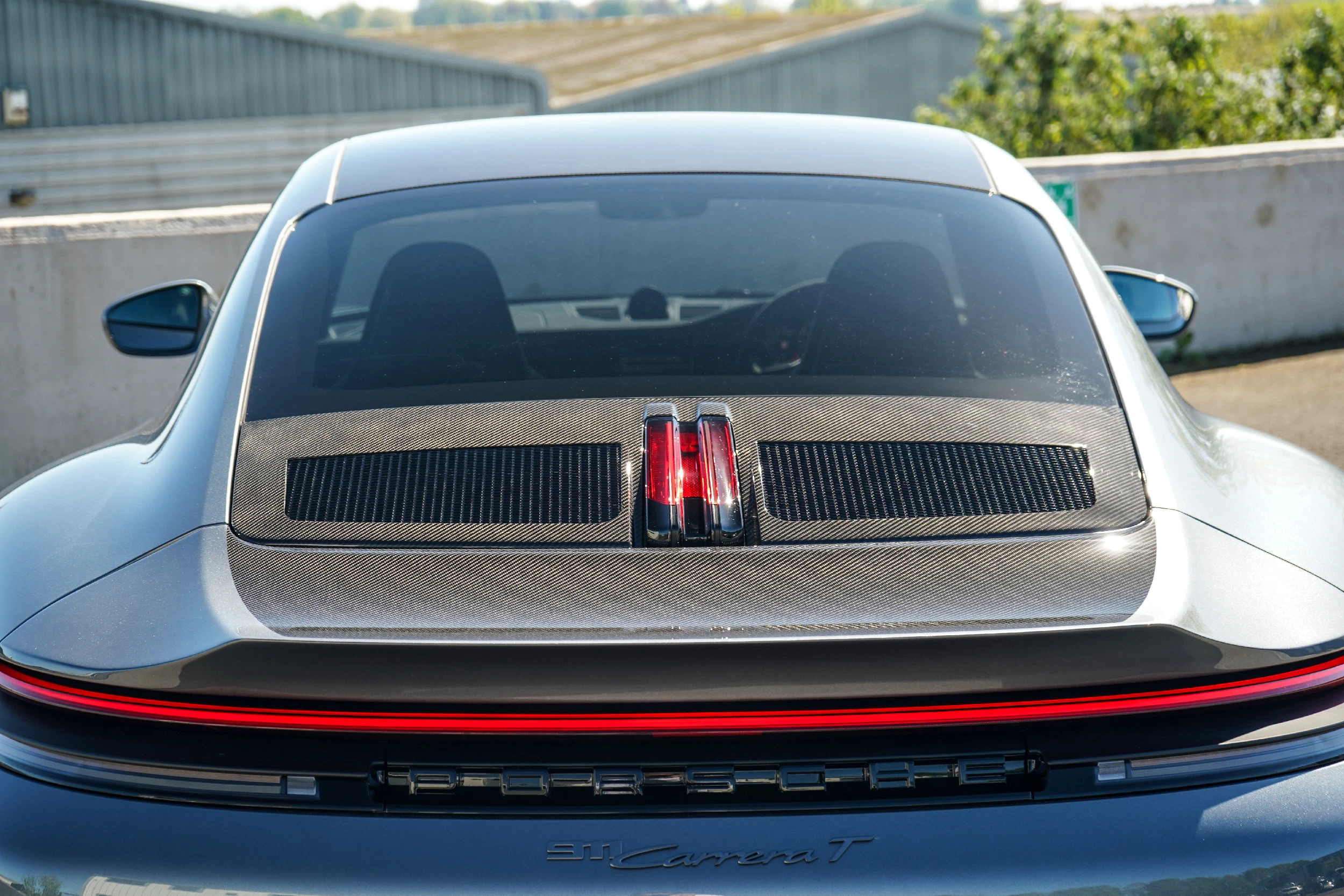
The engine cover and fuse panels are where most 911 owners start. What each changes, which option to order, and why there is no bonnet.
Read articleRinse first with clean water to lift grit, then hand wash with a pH-neutral shampoo and a soft microfibre mitt. Rinse again and dry with a blower or a soft drying towel. Work on a cool panel in the shade. It is the same routine good paint wants, and the rinse before contact is the step that prevents swirl marks.
No. Brush-type automatic washes will mar a lacquered carbon panel faster than a year of driving, and harsh degreasers attack the clear coat. Hand washing with a pH-neutral shampoo and a microfibre mitt is the only safe routine.
It is worth it on parts you care about. A ceramic coating adds a harder sacrificial layer than wax and carries UV inhibitors, which is the protection a lacquered carbon panel wants. Decontaminate and polish first, because a coating locks in whatever defects are underneath. Use paint protection film instead on lips and skirts that take stone chips.
Usually. If the lacquer is intact and has simply oxidised, polishing removes the dead surface layer and restores clarity. If the yellowing has reached the resin underneath, the part needs re-clearing, which is a bodyshop job. The test is whether the lacquer has peeled or cracked: dull but intact is a polishing problem, lifting at an edge is a refinishing one.
Not much, because you are looking after the coating in both cases. Both are cloth and resin. Fibreglass parts are more often finished in gel coat than automotive lacquer, and gel coat chalks and fades faster in sunlight. The other difference shows under a stone chip: carbon shows black weave, fibreglass shows white or grey.