992 Collection
991 Collection
718 Collection
Wheels
Accessories


Most people start at the back of the car, and they are right to. The engine cover is the largest single piece of plastic on a 911's rear deck, and the fuse panels are the cheapest carbon you can put in the cabin. Neither needs cutting, drilling or electrical work. Here is what each one changes, what the options mean, and why there is no carbon bonnet in the range.
A 992 leaves the factory with a moulded plastic engine cover across the rear deck and two plastic fuse panel covers in the footwells. Both are perfectly good parts. Both sit next to carbon on cars specified with it.
That is the whole reason this is where owners start. Big visible area, simple swap, no permanent change to the car.
Fuse cover panels at £395 to £495 for the pair, then the engine cover at £1,875 to £2,175. Both replace factory plastic on factory mounting points, both fit in a single visit, and both come off again if the car is going back to standard before sale. Nothing is cut, drilled or bonded.
The fuse covers are the cheaper of the two by a distance and they change the cabin every time you get in.
Do them together if you can. Cloth runs vary between batches, and one visit to a fitter costs less than two.
The engine cover is the bigger visual change. It is the panel people see when they walk up to a 911 from behind, and it sits directly under the ducktail or spoiler.
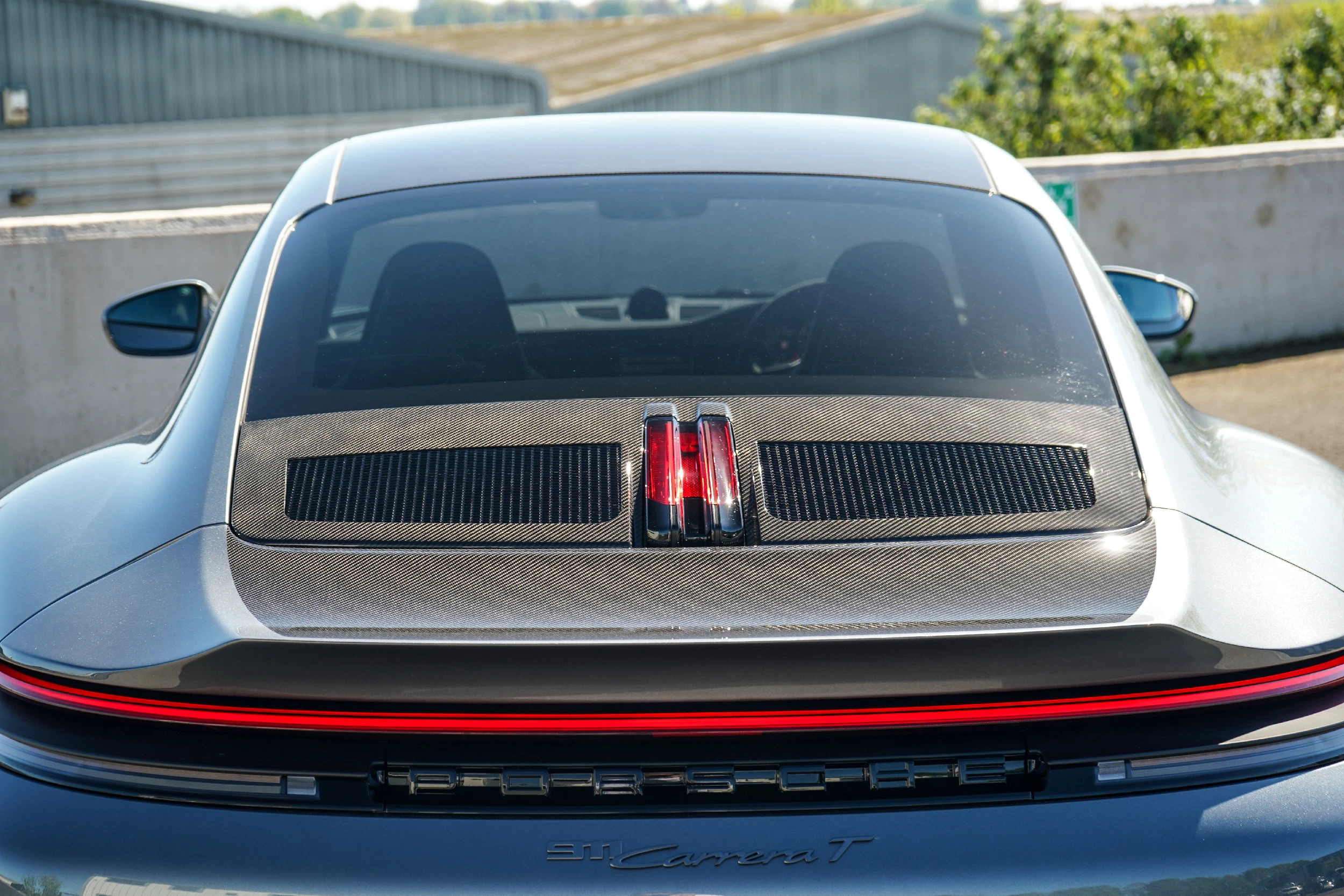
It replaces the stock plastic cover across the rear deck with carbon, and it is not simply a reskin of the original shape. The 992 engine cover carries open ducting at the trailing edge to feed the intercoolers and air intakes, and venting sized comparably to the stock openings that feed the engine deck fans.
That matters more than it sounds. The rear deck on a 992 is doing cooling work, and a decorative panel that restricts it would be a bad trade for a nicer weave.
It fits 992.1 and 992.2 Carrera, S, T and GTS models. Not GT3, and not Turbo, because both have different rear deck arrangements.
Paired with a ducktail it finishes the whole rear deck in one material. On its own it still changes the largest plastic surface on the back of the car.
Two versions, and the third brake light decides. If your car has an aerokit wing, a fixed wing or a fixed ducktail with the brake light moved into that assembly, you want the brake light delete version. If the light still sits in the engine cover, you want the standard version, and the original light transfers across during fitment.
The transfer is a mechanical job rather than an electrical one. No wiring changes are needed either way.
Worth checking before you order rather than after. Look at the back of the car and find the high-level brake light. If it is in the deck, you need the standard cover. If it is up in the wing or the ducktail, you need the delete.
Getting this wrong is the most common ordering error on this part, and it is a two-second check.
One cover in each footwell, supplied as a pair. They replace the plastic the factory fits and they are the cheapest way into carbon anywhere on the car.
The thing to get right is weave. There is a version in 1x1 plain weave for Carrera and GTS cabins, which is what those cars most commonly carry inside, and a separate version matched to what GT3 cabins carry. Ordering the wrong one gives you carbon that argues with the carbon already there.
They are also the part owners comment on most, because a footwell is at eye level every time you get into the car.
We do not make one, and on a 911 the question is worth unpacking. The bonnet is at the front and the engine is at the back, so a carbon 911 bonnet saves weight over the front axle rather than changing anything about the engine bay.
Porsche already fits carbon bonnets where it matters. The GT3 and GT3 RS carry them from the factory, as does the 718 GT4 RS, and those are structural decisions taken alongside the crash structure underneath.
An aftermarket bonnet is a different proposition to a cover panel. It is a hinged, latched, load-bearing panel with pedestrian impact requirements behind it, and it has to line up with the wings and the headlights across a metre and a half of shut line.
Which is why our range is covers, lips, sills and spoilers rather than structural panels. If a part carries a load or affects crash behaviour, it is not an OEM+ swap, it is an engineering programme.
Both parts are autoclave-cured pre-preg carbon, hand-built in the UK. Pre-preg means the cloth arrives with the resin already measured into it. An autoclave cures it under heat and pressure together, which keeps a wide panel like an engine cover flat across its span.
The engine cover comes in 2x2 twill matched to the weave Porsche uses on its own mirrors and roof panels. The fuse covers use the 1x1 plain weave found in the cabins.
Finishes run from gloss lacquered visual carbon through bare carbon to gloss black and primer. An engine cover sits flat to the sky, so it takes more direct sun than any other external part, which is an argument for a properly lacquered finish rather than the cheapest option.
Every part is delivered with a written fitting guide, and there is a technical team on the contact form for fitting questions. Parts in stock go out quickly, and parts built to order are dispatched within 14 to 35 days.
Three things to take away. Check where your third brake light sits before ordering an engine cover. Match the fuse cover weave to your cabin. And if someone offers you a carbon bonnet for a 911, ask what it does that the factory has not already done on the cars that need it.
Start with the 992 engine cover.
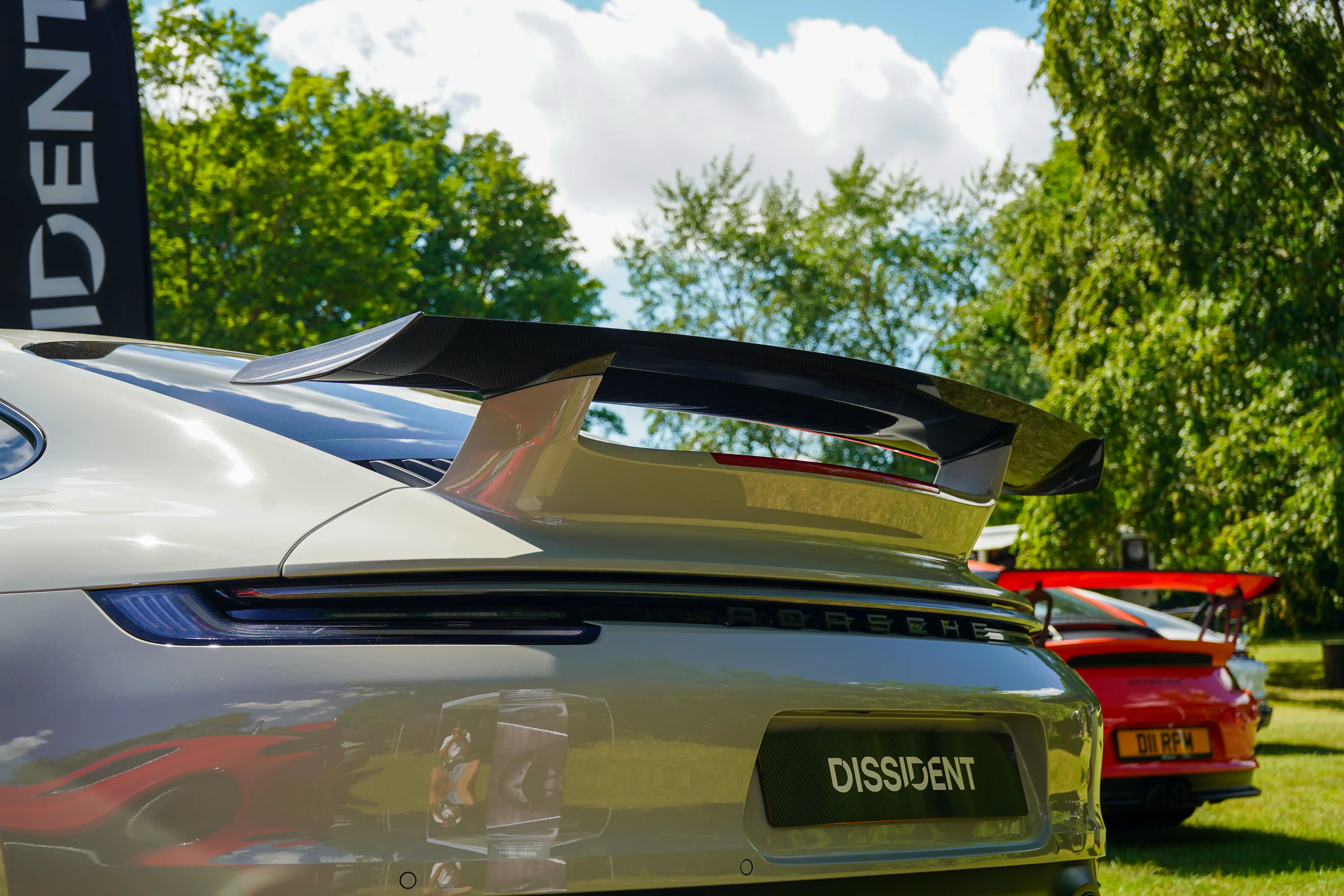
A GT wing works the air above the car, a ducktail changes where it leaves. What each does, what fits, and which suits your Porsche.
Read article
How to clean and protect carbon fibre car parts, what sunlight does to the lacquer, and how to rescue cloudy or yellowed carbon.
Read articleFuse cover panels at £395 to £495 for the pair, then the engine cover at £1,875 to £2,175. Both replace factory plastic on factory mounting points, both fit in a single visit, and both come off again if the car is going back to standard before sale. Nothing is cut, drilled or bonded.
It fits 992.1 and 992.2 Carrera, S, T and GTS models. Not GT3 and not Turbo, because both have different rear deck arrangements. It carries open ducting at the trailing edge to feed the intercoolers and air intakes, and venting sized comparably to the stock openings for the engine deck fans.
The third brake light decides. If your car has an aerokit wing, a fixed wing or a fixed ducktail with the brake light moved into that assembly, order the brake light delete version. If the light still sits in the engine cover, order the standard version and the original light transfers across during fitment. No wiring changes are needed either way.
Match the weave to your cabin. There is a version in 1x1 plain weave for Carrera and GTS interiors, which is what those cars most commonly carry, and a separate version matched to GT3 cabins. Ordering the wrong one gives you carbon that argues with the carbon already there.
We do not make one. On a 911 the bonnet is at the front and the engine is at the back, so a carbon bonnet saves weight over the front axle rather than changing the engine bay. It is also a hinged, latched, load-bearing panel with pedestrian impact requirements behind it, which makes it an engineering programme rather than a cover swap. Porsche already fits carbon bonnets on the cars that need them.