

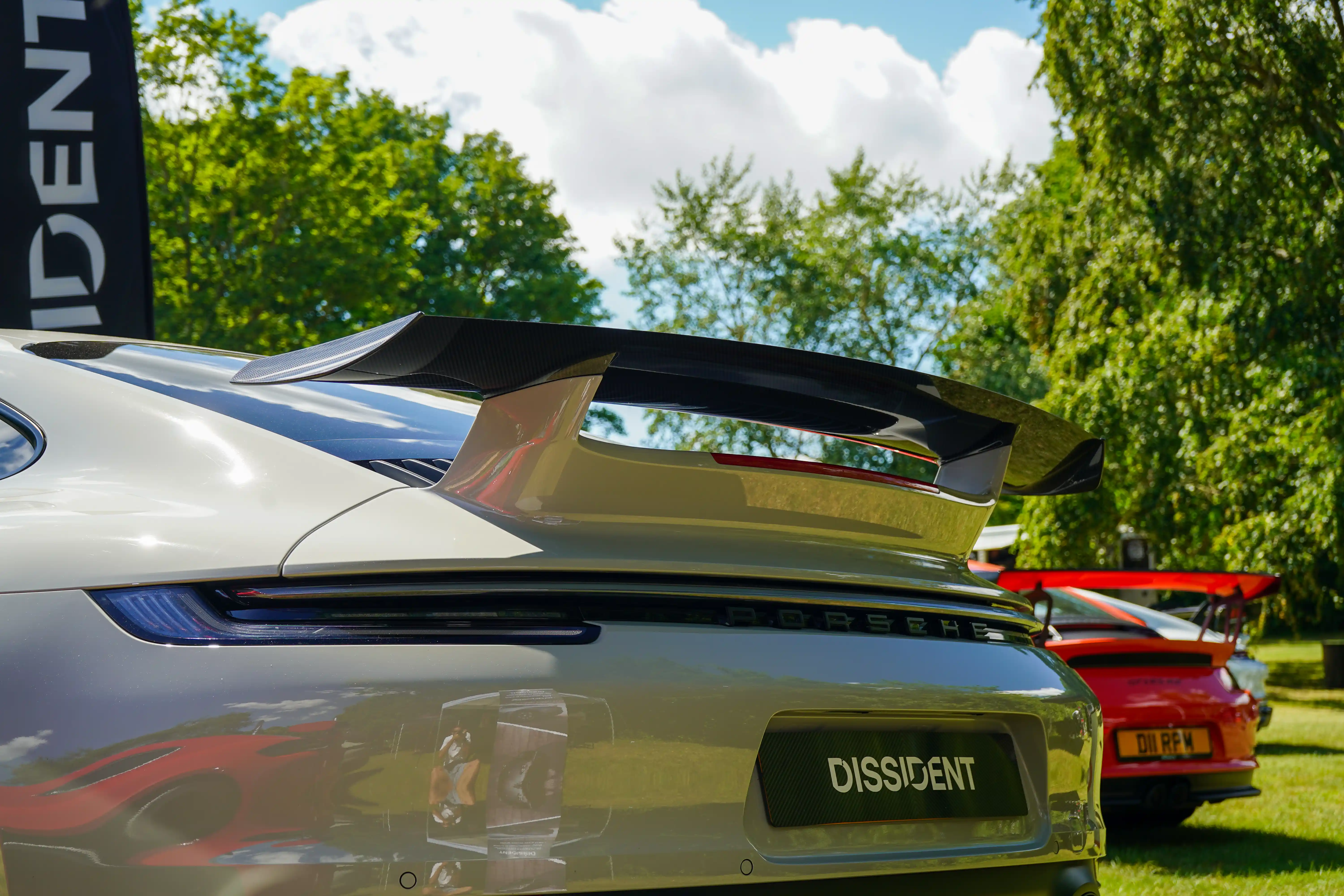
A GT wing and a ducktail solve the same problem in opposite ways. One adds a separate aerofoil above the bodywork and works the air passing over and under it. The other reshapes the trailing edge of the car and changes where the air lets go. Which one suits your Porsche depends on what the car is for, and on one question most people never ask: can you put it back?
The comparison usually gets made on looks alone, which is fair enough, because on a road car looks are most of the decision. It is still worth knowing what you are choosing between.
Here is the honest version. What each one does, what each one costs, what fits what, and where the reversibility line sits.
A ducktail for a road car, a wing for a track car, and the deciding factor is usually reversibility rather than downforce. A ducktail replaces the existing spoiler cover on original mounting points and comes off in an afternoon. A GT wing on a car that did not come with one is a bigger commitment and, on most road cars, produces very little at legal speeds.
There is a third case. If your car already has a factory aerokit wing, you can change the blade without changing anything structural, which is the best of both.
Take those in turn.
A wing is an inverted aerofoil mounted in clean air above the bodywork. Air passing over the upper surface travels further and faster than the air underneath, which lowers the pressure above and pushes the wing, and the car, down.
Height is the point. Sitting the blade above the boundary layer of turbulent air coming off the roof and rear deck is what lets it work properly, which is why serious wings sit on tall uprights and why swan-neck mounting exists at all.
The cost is drag. A wing generating real downforce is also generating real resistance, which is a good trade on a circuit and a poor one on a motorway.
And it needs balancing. Adding downforce at the rear without adding any at the front moves the car towards understeer at speed, which is why factory GT cars adjust both ends together.
A ducktail does not sit in the airflow, it changes the shape of the car. By curving the trailing edge of the engine cover upward, it moves the point where air separates off the back of the body, which reduces rear lift without adding a separate surface to the airflow.
The original did all three of the things a wing usually trades against each other. It reduced lift, it fed cooling air to the engine behind the rear axle, and it raised top speed slightly rather than lowering it, because tidying the separation behind the car beat the extra frontal area.
On a modern 911 the effect is smaller, because the car already has a deployment spoiler doing a version of that job. What you are buying is proportion, material and the shape's history.
That is not a lesser reason. It is just a different one, and it should be priced and judged as such.
This is where the two diverge most, and it matters more than downforce on a car that will be sold one day.
Our mini ducktails replace the plastic spoiler cover and leave the motor and mechanism untouched. Fitment takes minutes, nothing is cut or drilled, and the car returns to standard whenever you want. The 992.1 mini ducktail runs £1,625 to £2,500 on that basis.
A fixed ducktail is a bigger step. The deployment unit comes out entirely and the car is coded so the dash does not report a fault. Still reversible, but it is a workshop job in both directions.
An aftermarket GT wing on a car that never had one is usually the least reversible of the lot, because the uprights have to attach to something. Anything that involves drilling the engine cover or bonding a base plate is a permanent change to a 911, and a future buyer will ask about it.
Three routes, and which one applies depends on what the car already has.
Ducktails, mini and fixed, for Carrera-bodied 911s with a deployment spoiler. Coupe and Targa or Cabriolet versions are separate parts on the 992, and one part covers all body styles on the 991.
The 992 rear wing blade at £1,850 to £2,150 for owners whose cars already carry the factory aerokit wing. It replaces the OEM blade and mounts to the existing aerokit wing base, so nothing structural changes and the car keeps its original geometry. It is the neatest answer in the range: a carbon wing without a carbon wing's commitment.
And the 718 GT4 rear wing at £2,600 to £2,999, which replaces the original wing using the factory uprights, brackets and bolts. Endplates are separate at £1,399 because they detach, so a second set lets you alternate between visual carbon and body colour. A gurney at £445 to £595 adds rear downforce when used with our wing.
What we do not make is a wing for a car that never had one. That is deliberate.
Ask what the car does on a Sunday.
A road 911 that gets driven to breakfast and occasionally down a good road wants a ducktail. It sharpens the silhouette, it keeps the car quiet in a car park, and it comes off before sale.
A car that does five trackdays a year and gets driven there wants the wing it already has, in carbon, with the front balanced to match. That is the wing blade route.
A dedicated track car wants a proper wing on tall uprights with front aero to suit, and that is a different conversation with a different supplier.
Worth adding: declare any change to the rear of the car to your insurer, wing or ducktail. It takes one phone call and it is the cheapest part of the whole exercise.
Everything is autoclave-cured pre-preg carbon, hand-built in the UK, in a 2x2 twill matched to the weave Porsche uses on its own mirrors and roof panels. Pre-preg means the cloth arrives with the resin already measured into it. An autoclave cures the part under heat and pressure together, which is what keeps a wing blade straight across its span and a ducktail true along its trailing edge.
Finishes run from gloss lacquered visual carbon through bare carbon to body colour, with or without a carbon accent. Rear parts sit flat to the sky and take more direct sun than anything else on the car, so finish quality shows up over years rather than months.
Every part is delivered with a written fitting guide, and we recommend a professional fitment. Parts in stock go out quickly, and parts built to order are dispatched within 14 to 35 days.
Three things to take away. A wing works the air above the car and a ducktail changes where the air leaves it, so they are not competing versions of the same part. Reversibility is the question to ask before downforce on any road car. And if your 911 already wears the aerokit wing, changing the blade gets you carbon at the back without touching the structure.
Start with the 992.1 mini ducktail.
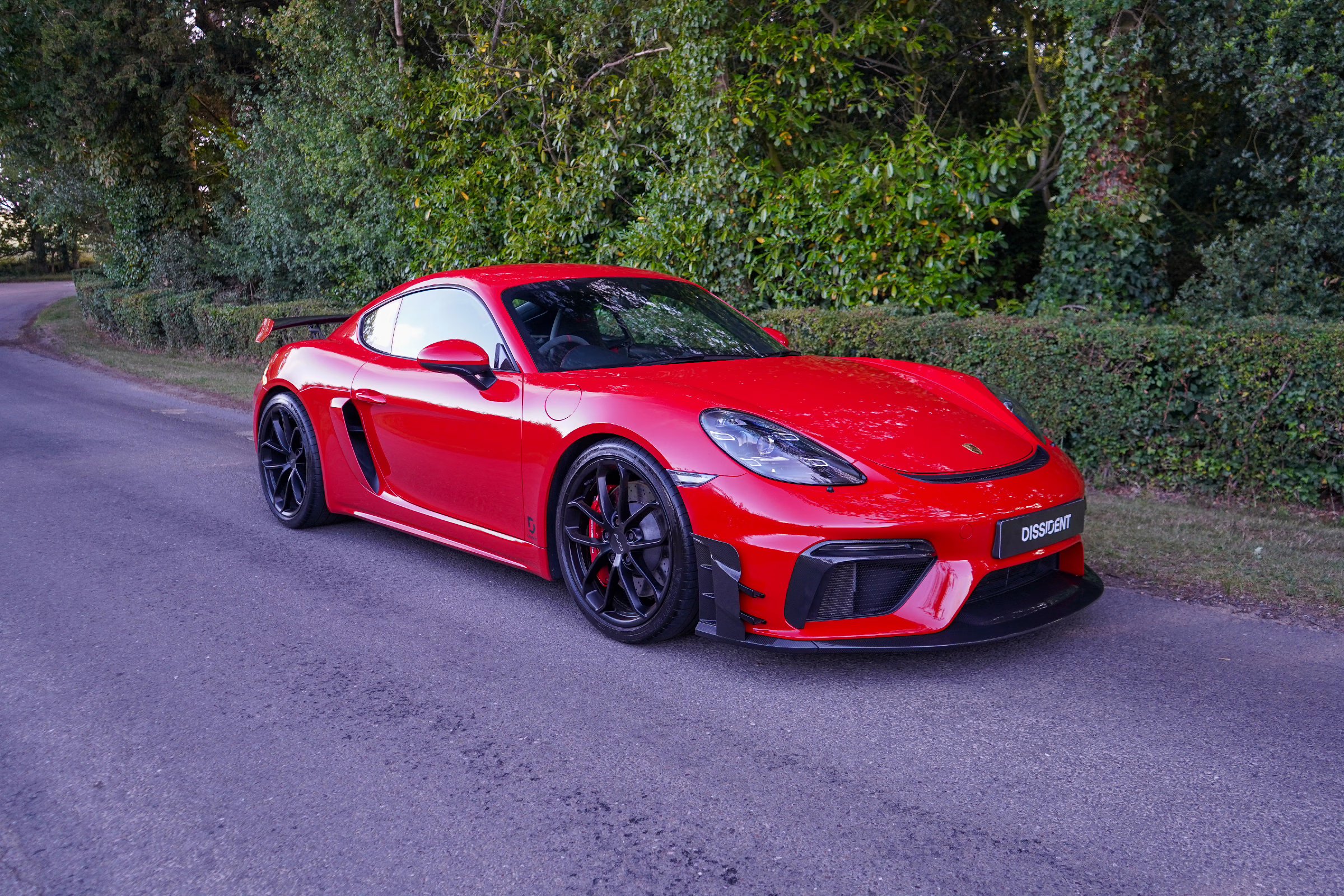
A buyer's guide to 718 Cayman GT4 and GT4 RS front end carbon: splitter, air curtains, diveplanes and the three packs compared.
Read article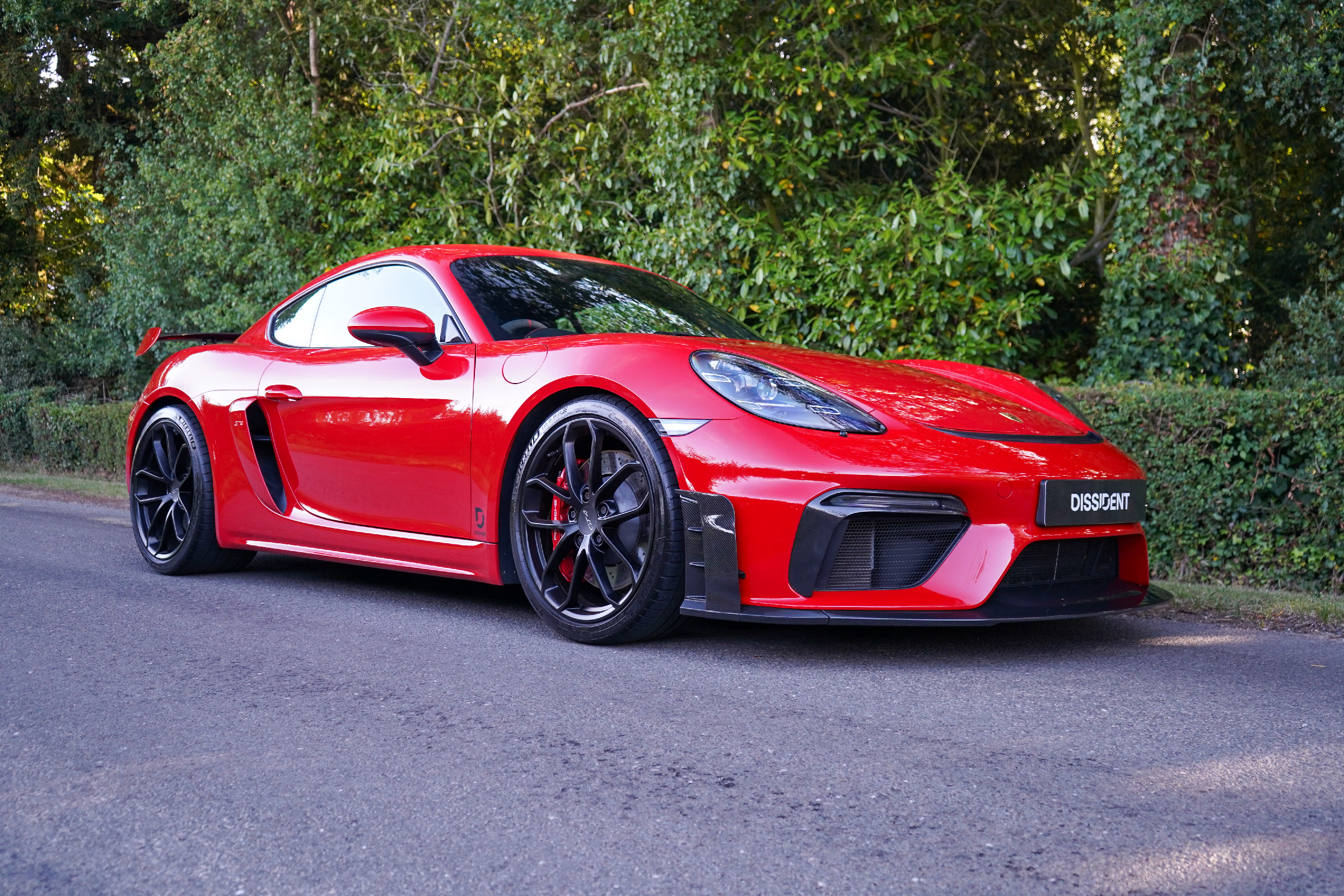
What a front splitter does, how it differs from a lip or air dam, why fitment decides if it works, and which one fits your Porsche bumper.
Read articleA wing is a separate aerofoil mounted above the bodywork, and it works the air passing over and under it. A ducktail reshapes the trailing edge of the car so the air separates later, which cuts rear lift without adding a surface to the airflow. A wing adds downforce and drag together. A ducktail adds neither in any great quantity on a modern car.
A ducktail on almost any road car, because it replaces the existing spoiler cover on original mounting points and comes off again. A GT wing on a car that never had one usually means drilling or bonding, which is a permanent change a future buyer will ask about. At legal road speeds a wing produces very little anyway.
Yes, if the car already carries the factory aerokit wing. The carbon wing blade replaces the original blade and mounts to the existing aerokit wing base, so nothing structural changes and the car keeps its original geometry. It runs £1,850 to £2,150.
It moves the car towards understeer at speed, because you have added downforce at one end only. Factory GT cars adjust front and rear together for exactly this reason, usually in matched positions. If you are adding rear aero for track use, plan the front at the same time.
Declare it either way. Any change to the rear of the car should go on your insurance declaration, and it takes one phone call. A mini ducktail is reversible in an afternoon, a fixed ducktail needs the deployment unit removed and coded out, and an aftermarket wing on a car that never had one is usually the least reversible of the three.