992 Collection
991 Collection
718 Collection
Wheels
Accessories


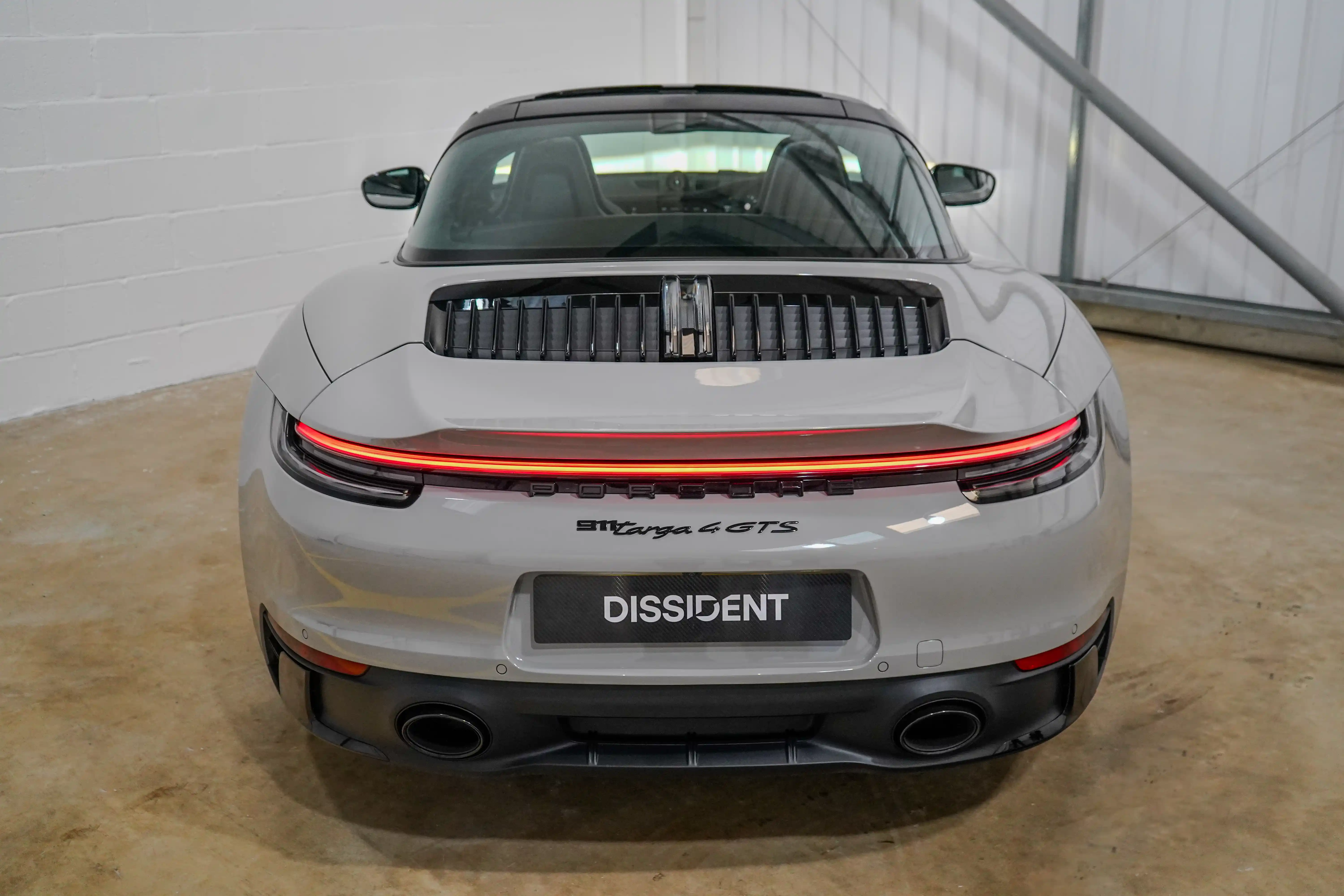
Open-top 911s get treated as an afterthought by most of the carbon aftermarket, which is odd given how many Porsche sells. The rear deck on a 992 Targa or Cabriolet is a different shape to the coupe, so it needs its own ducktail rather than a shared one. Here is what fits an open 911, what is body-specific, and the one part designed for driving with the roof down.
A 992 Targa and a 992 Cabriolet share more with each other than either shares with a coupe. Both carry a folding roof mechanism, both have a different rear deck to accommodate it, and both change what you can bolt to the back of the car.
Get that wrong and the part does not fit. Get it right and an open 911 takes almost everything the coupe does.
Fitment lines below come from our own product pages, and prices are current ranges across finishes.
On a 992, the body-specific Targa and Cabriolet ducktail at £1,625 to £2,500, door triangles from £300 a pair, fuse cover panels at £395 to £495, and the Sport Design front lip and rear diffuser, both of which are specified to fit coupe, cabriolet and Targa. On a 991, the standard ducktail already covers all three body styles.
The one part that does not cross over is the coupe ducktail. It is explicitly not suitable for Targa and Cabriolet models, and there is a separate part for them.
Everything else in the detail range works on any body style, because door triangles and fuse covers sit nowhere near the roof mechanism.
The rear deck is the reason. On a coupe the deployment spoiler sits in a fixed engine cover. On a Targa or Cabriolet the same area has to accommodate a roof that folds into it, so the panel underneath is a different shape.
The 992 Targa and Cabriolet ducktail replaces the original plastic spoiler cover on those cars, and it fits all 992.1 and 992.2 Carrera Targa and Cabriolet models. It is not suitable for coupes, in the same way the coupe part is not suitable for these.
Prices run £1,625 to £2,500 on the 992.1 version and £1,625 to £2,105 on the 992.2. Same idea, same fitment approach, different moulding.
The mechanism underneath is untouched. The panel still rises and drops as it did before, no electrical work is needed, and fitment is reversible.
Check the body style before you order, not the model year. That is the single most common ordering mistake on the 992 range.
One part covers everything. The 991.2 ducktail is specified for all 991.2 Carrera models with the standard rear deployment spoiler, in coupe, cabriolet and Targa form, at £1,195 to £1,715. The 991.1 version does the same across that generation from £1,195.
That is a quirk of how the two generations were designed rather than a decision on our side. The 991's rear deck geometry is close enough across the body styles for one moulding to work.
The 991 carbon packages follow the same logic. Both the 991.1 and 991.2 packages are specified for all Carrera models including wide and narrow body, Targa, Cabriolet and Coupe, so an open car gets the full set rather than a reduced version.
This is the one item in the range aimed squarely at cars driven with the roof down. The anti-buffet door triangle adds an aero lip at the leading edge of the window opening, which reduces the low-frequency booming that fills a cabin at speed with a window down or the roof stowed. It runs £375 to £475 a pair.
Buffeting is a resonance problem rather than a wind noise problem. Air passing across an opening sheds vortices, and if the frequency of those vortices lines up with the cavity behind them, the cabin acts like a bottle being blown across.
The anti-buffet triangles change where the air separates at that leading edge, which shifts the frequency. The result is a car that is more comfortable to drive open at motorway speeds.
On a coupe the choice between flat and anti-buffet triangles is aesthetic. On a Targa or Cabriolet it is not, and this is the version to buy.
Worth knowing, because it explains the shape of the car you are buying parts for.
The Targa was Porsche's answer to a regulatory problem. In the mid-1960s the United States looked likely to restrict open-top cars over rollover safety, so Porsche built what it called a safety cabriolet: a fixed roll bar behind the seats, a removable roof panel and a wrap-around rear window. It debuted at the Frankfurt Motor Show in 1965 and took its name from the Targa Florio, the Sicilian road race Porsche won repeatedly in the 1950s and 60s.
The bar disappeared for the 993 and 996, which used a sliding glass roof instead, and came back with the 991 in 2014 along with the wrap-around rear window. The roof now moves on its own in a 19-second sequence, with the rear window lifting and the roof panel sliding away beneath it.
That mechanism is what dictates the rear deck, and the rear deck is what dictates the ducktail. Every fitment rule on this page traces back to a decision made in 1965.
Two more parts fit an open 911, provided the car has the right bumpers.
The 992.2 front lip for Sport Design and GTS bumpers is £1,695, and the 992.1 rear diffuser for GTS and Sport Design is £1,895. Both are specified for coupe, cabriolet and Targa, so body style is not the constraint here. Bumper type is.
Sport Design bumpers come as standard on GTS cars and as an option on Carrera, S and T. If you are not sure which you have, the front air intake shapes differ and a photograph is enough for the technical team to confirm.
Pair either with the ducktail and the car reads as a set rather than a collection. Order them together if you can, because cloth runs vary between batches and matched parts sit better next to each other.
Everything is autoclave-cured pre-preg carbon, hand-built in the UK, in a 2x2 twill matched to the weave Porsche uses on its own mirrors and roof panels. Pre-preg means the cloth arrives with the resin already measured into it. An autoclave cures the part under heat and pressure together, which keeps the panel dimensionally accurate and the finish stable in sunlight.
That last point matters more on an open car. A Targa or Cabriolet spends more of its life with the interior in direct sun, and the same applies to carbon on the rear deck, which sits flat to the sky.
Finishes run from gloss lacquered visual carbon through bare carbon to body colour, with or without a carbon accent. If you want visible carbon showing, do not order in primer, because primer is intended for a local painter to colour code.
Every part is delivered with a written fitting guide, and there is a technical team on the contact form for fitting questions. Parts in stock go out quickly, and parts built to order are dispatched within 14 to 35 days.
Three things to take away. On a 992, body style decides the ducktail and the coupe part will not fit an open car. On a 991, one ducktail covers all three body styles. And if the roof comes down regularly, buy the anti-buffet triangles rather than the flat ones, because the lip does a job you will hear.
Start with the 992 Targa and Cabriolet ducktail.
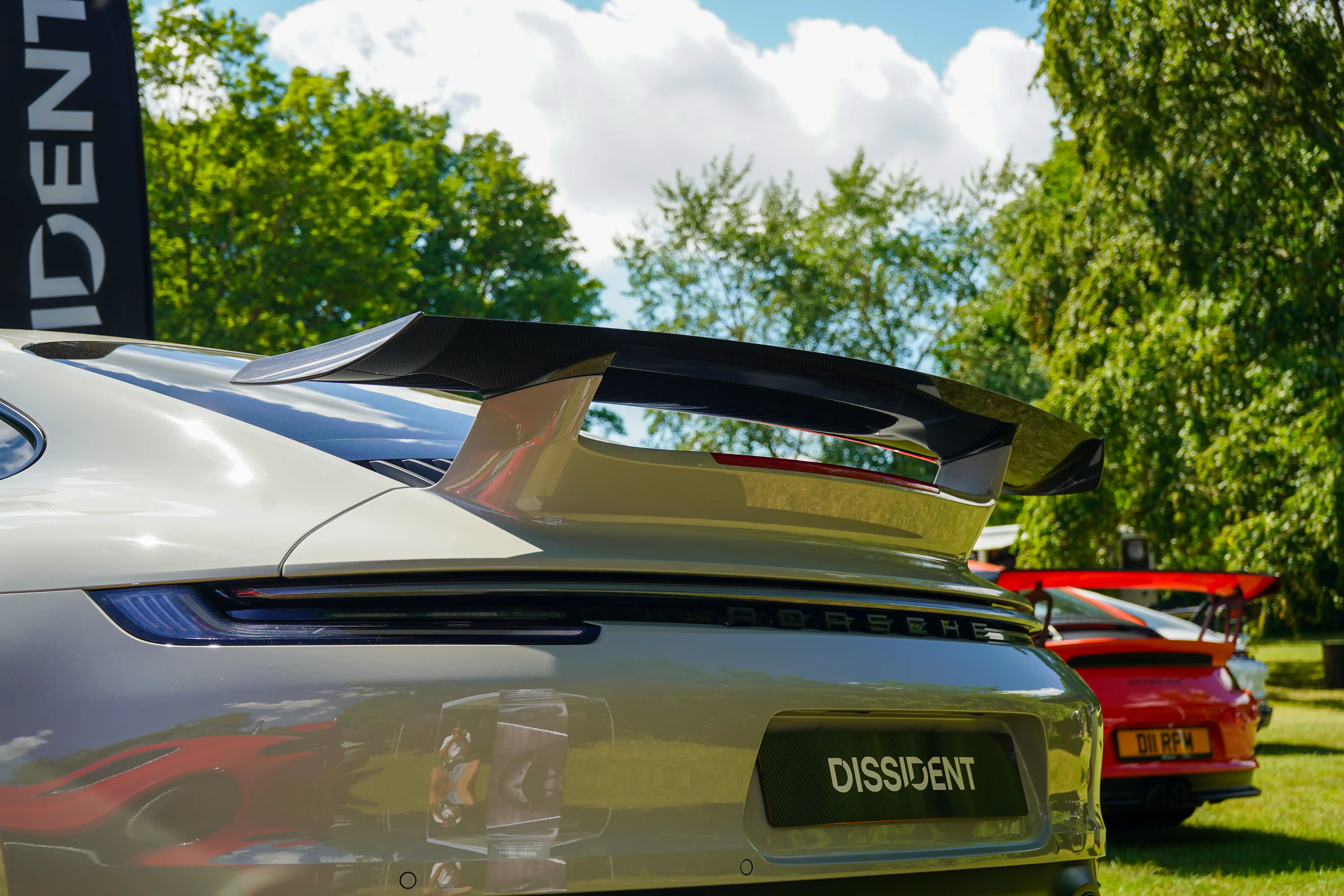
A GT wing works the air above the car, a ducktail changes where it leaves. What each does, what fits, and which suits your Porsche.
Read article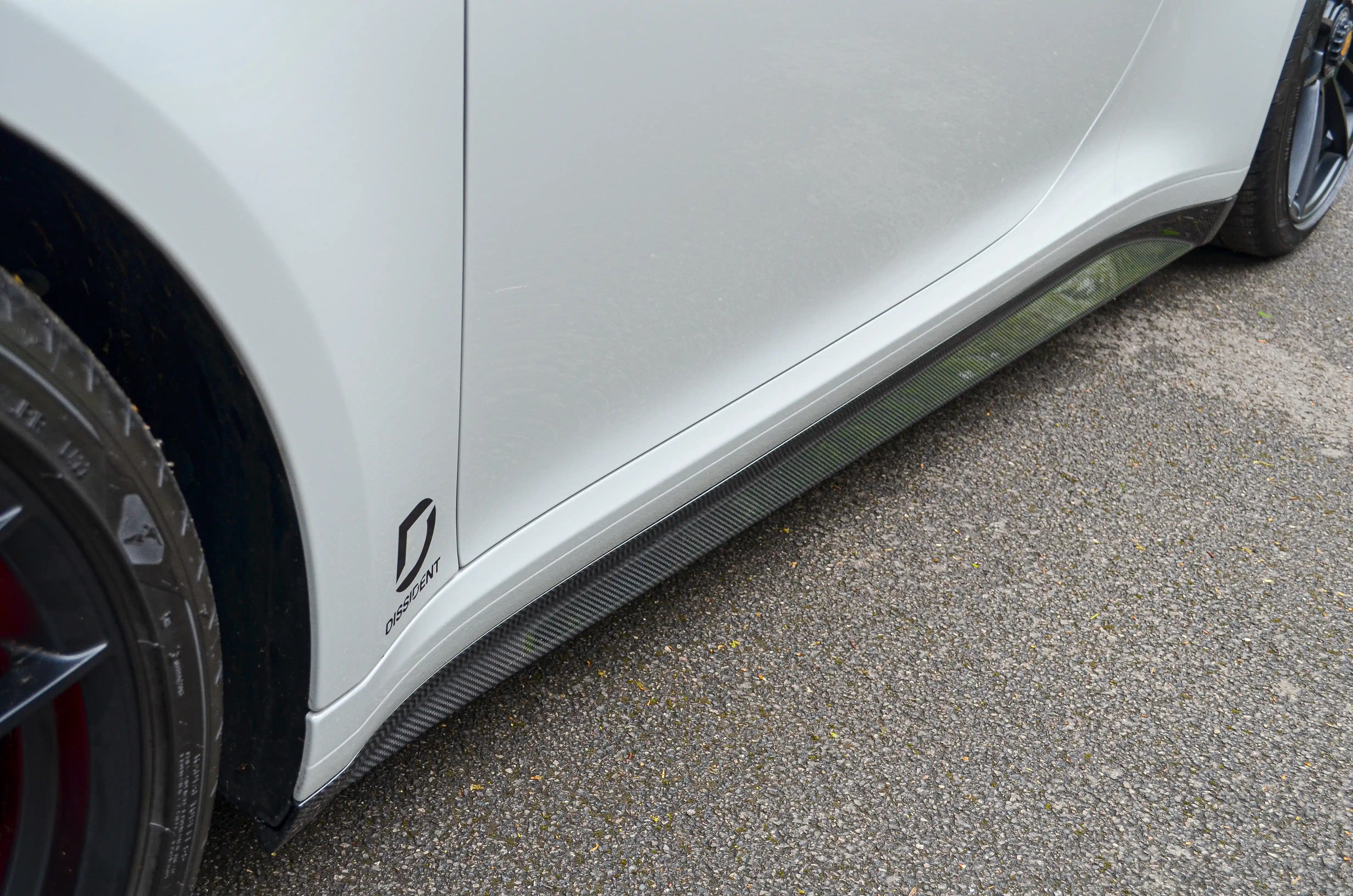
Side skirts, door triangles and fuse covers change a 911 more than their price suggests. What each does, what it costs and what to check.
Read articleOn a 992, the body-specific Targa and Cabriolet ducktail at £1,625 to £2,500, door triangles from £300 a pair, fuse cover panels at £395 to £495, and the Sport Design front lip and rear diffuser, both specified for coupe, cabriolet and Targa. On a 991 the standard ducktail already covers all three body styles.
No. The coupe ducktail is explicitly not suitable for Targa and Cabriolet models, because those cars have a different rear deck to accommodate the folding roof mechanism. There is a separate Targa and Cabriolet part, and it does not fit a coupe either. Check body style before model year when ordering.
Buffeting is a resonance problem rather than a wind noise problem. Air passing across an open window sheds vortices, and if their frequency lines up with the cabin behind them the car acts like a bottle being blown across. The anti-buffet triangle adds an aero lip that changes where the air separates, which shifts the frequency and makes the car more comfortable open at speed.
Porsche needed an answer to expected United States restrictions on open-top cars in the mid 1960s, so it built a safety cabriolet with a fixed roll bar, a removable roof panel and a wrap-around rear window. It debuted at the Frankfurt Motor Show in 1965 and took its name from the Targa Florio road race in Sicily. On current cars the roof opens and closes automatically in a 19 second sequence.
Yes, provided the car has the right bumpers. The 992.2 Sport Design front lip and the 992.1 Sport Design rear diffuser are both specified for coupe, cabriolet and Targa, so body style is not the constraint. Sport Design bumpers are standard on GTS cars and optional on Carrera, S and T, and a photograph is enough to confirm which you have.