992 Collection
991 Collection
718 Collection
Wheels
Accessories



A front splitter is one of the few aero parts on a road car that does something measurable, and one of the most commonly mis-sold. Most of what gets listed as a front splitter is a lip, which is a different part doing a different job. Here is what each one does, what it takes to make it work, and which version fits your car.
Search for a front splitter and you get hundreds of results, all called the same thing, ranging from a strip of plastic to a flat carbon shelf with fences on it. They are not interchangeable and they do not produce the same result.
The confusion is not accidental. Splitter sounds like a performance part, so everything gets called a splitter.
This is the version from a workshop that makes them: what the physics is, why fitment decides whether any of it works, and what fits a 911 or a 718 without cutting anything.
A splitter is a flat horizontal shelf at the bottom of the front bumper. Air hitting the front of the car stalls above it and speeds up underneath it, so pressure builds on top and drops below. That difference presses the front of the car down. More front grip, less lift, better turn-in.
The mechanism is worth understanding because it explains everything else. As the splitter itself does not create downforce directly, it increases the area over which high pressure can build. The vertical face of the bumper stops the air. The horizontal shelf gives that high pressure somewhere to push.
Underneath, the opposite happens. Air squeezed into the narrow gap between the splitter and the road accelerates, and faster air means lower pressure. The underside is doing most of the work, which is why ride height changes a splitter's effect far more than its shape does.
Area helps, up to a point. Racers generally run 100 to 200mm of forward extension, because beyond that the returns fall away and the thing starts hitting the ground under braking.
An air dam is vertical and blocks air from going under the car. A splitter is horizontal and generates downforce from the pressure difference across it. A lip is a shallow extension of the bumper that does a little of both and mostly changes how the car looks. Most road car parts sold as splitters are lips.
That is not a criticism. On a road car a lip is usually the right answer, because a proper splitter needs ground clearance you do not have and an underbody sealed well enough to be worth it.
The tell is orientation. If the part sticks forward parallel to the road, it is a splitter. If it hangs down, it is an air dam. If it wraps the lower bumper edge and adds an inch or two of projection, it is a lip.
We call ours splitters and lips depending on which they are, and the product pages say which. Worth checking that on anyone's listing before you compare prices.
They work, but modestly. Aerodynamic force rises with the square of speed, so a part generating useful downforce at 120mph is doing very little at 40. On a UK B road the honest answer is that a road-spec splitter changes the look of the car far more than it changes the handling.
That is worth saying plainly, because plenty of listings imply otherwise. At legal road speeds the pressure differential across a shallow lip is small, and the difference you feel is mostly confidence rather than measurable grip.
Where it does earn its keep is at track speeds, and in the balance of the car. Adding rear aero without adding front aero moves the car towards understeer. Front and rear go together, which is why factory GT cars adjust both.
So buy a road lip because you want the car to sit better and look lower. Buy track aero because you have a lap time you want. Both are reasonable, and only one of them needs justifying with numbers.
Two things decide whether a front splitter does anything: how well it seals to the bumper, and how consistently it holds its height.
Sealing first. The high-pressure zone above the splitter only exists if air cannot leak away round the edges. A part that leaves gaps where it meets the bumper is bleeding off the pressure that generates the downforce. This is the difference between a moulded panel made for a specific bumper and a universal strip bonded on with tape.
Height second. Because the underside does most of the work, a splitter that flexes upward at speed loses effect exactly when you want it. Stiffness is the reason race splitters get support rods, and it is one of the arguments for a properly consolidated carbon part over a floppy one.
Then there is the practical side. Every splitter and lip on a car lowers its approach angle. Ours mount on the original bumper points with no cutting, no drilling and no bonding, and they come off again, which matters if the car is ever going back to standard for sale.
Fitment is also the part that decides whether you can buy it at all. Porsche runs several bumper variants per generation, and a lip made for one will not go on another.
It depends on the bumper, not the model year. On a 992.1 the standard base bumper and the Sport Design bumper take different parts. On a 992.2 the Sport Design bumper takes its own front lip. On a 718 GT4 the front end is modular, with a separate centre section and side vents.
The 992.1 front splitter at £1,200 to £1,750 fits Carrera models with the standard base front bumper. Not Sport Design. Cars with the Sport Design bumper or the GTS take the GT Sport front splitter instead, at the same price. Same idea, different moulding, and ordering the wrong one is the most common mistake we see.
On a 992.2, the front lip for Sport Design and GTS bumpers is £1,695 and adds a small increase in width at the sides, which is what gives the front end its wider stance without changing the bumper itself.
All of them replace the original plastic on the original mounting points, fit in minutes, and come in gloss lacquered visual carbon, bare carbon, gloss black or primer.
The 718 GT4 is the interesting one, because the front end comes apart into pieces and can be built up in stages.
The front splitter centre section at £1,250 directly replaces the standard plastic centre. It works with the factory side vents, though the whole front reads better with carbon either side of it.
Those sides come in three specifications. The splitter end and vent sections at £1,875 a pair are the styling option. The road spec aero curtain at £2,100 adds a single small diveplane housed internally, which keeps the look conservative. The track spec aero curtain at £2,999 adds a pair of diveplanes each side, which increases downward pressure on the front axle at higher speeds.
That last one is the only part in this article making an aero claim, and it makes it because diveplanes on a bumper corner do measurably work. Everything else here is a material and proportion change that happens to sit in the airflow.
If you want the whole front done in one go, the front end carbon packs bundle the splitter centre, the curtains and the indicator shrouds in matched 2x2 twill, which is the weave the factory uses on the 718's own external carbon.
Everything is autoclave-cured pre-preg carbon, hand-built in the UK. Pre-preg means the cloth arrives with the resin already measured into it. An autoclave cures the part under heat and pressure together, which is what makes a panel hold its shape rather than sag over a season in the sun.
Front parts take more abuse than anything else on a car, so finish matters. Gloss lacquered visual carbon looks the best and shows stone chips first. Gloss black and primer are the pragmatic choices on a car that gets driven in winter, and primer lets a local painter colour code it.
Every part ships with a written fitting guide, and we recommend a professional fitment. Parts in stock go out quickly, and parts built to order are dispatched within 14 to 35 days.
Three things to take away. Most parts sold as front splitters are lips, and that is fine as long as you are paying lip money. Fitment beats shape, because a part that leaks pressure round its edges is decoration. And on a Porsche the bumper variant decides what fits, so check that before anything else.
Start with the 992.1 front splitter.
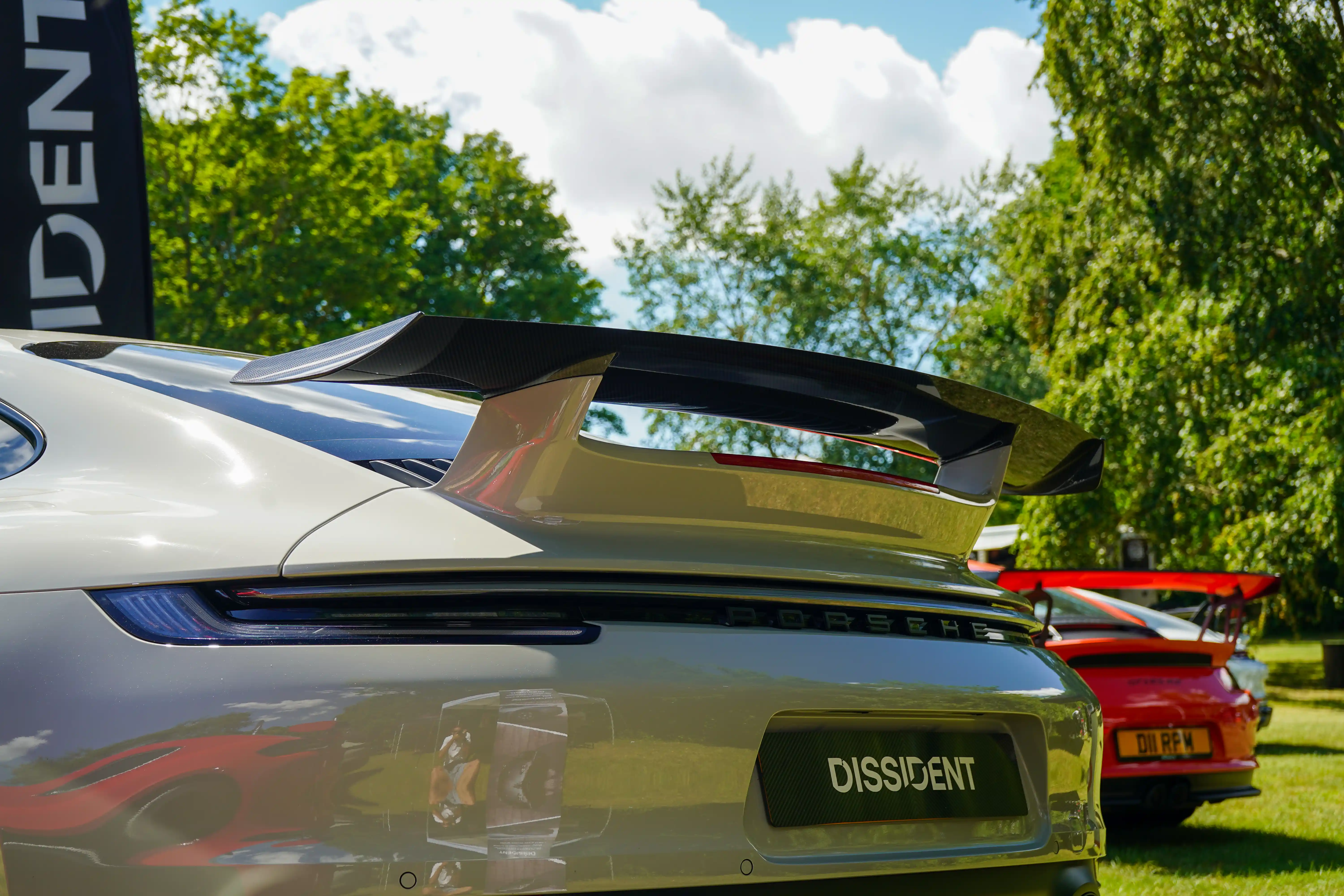
A GT wing works the air above the car, a ducktail changes where it leaves. What each does, what fits, and which suits your Porsche.
Read article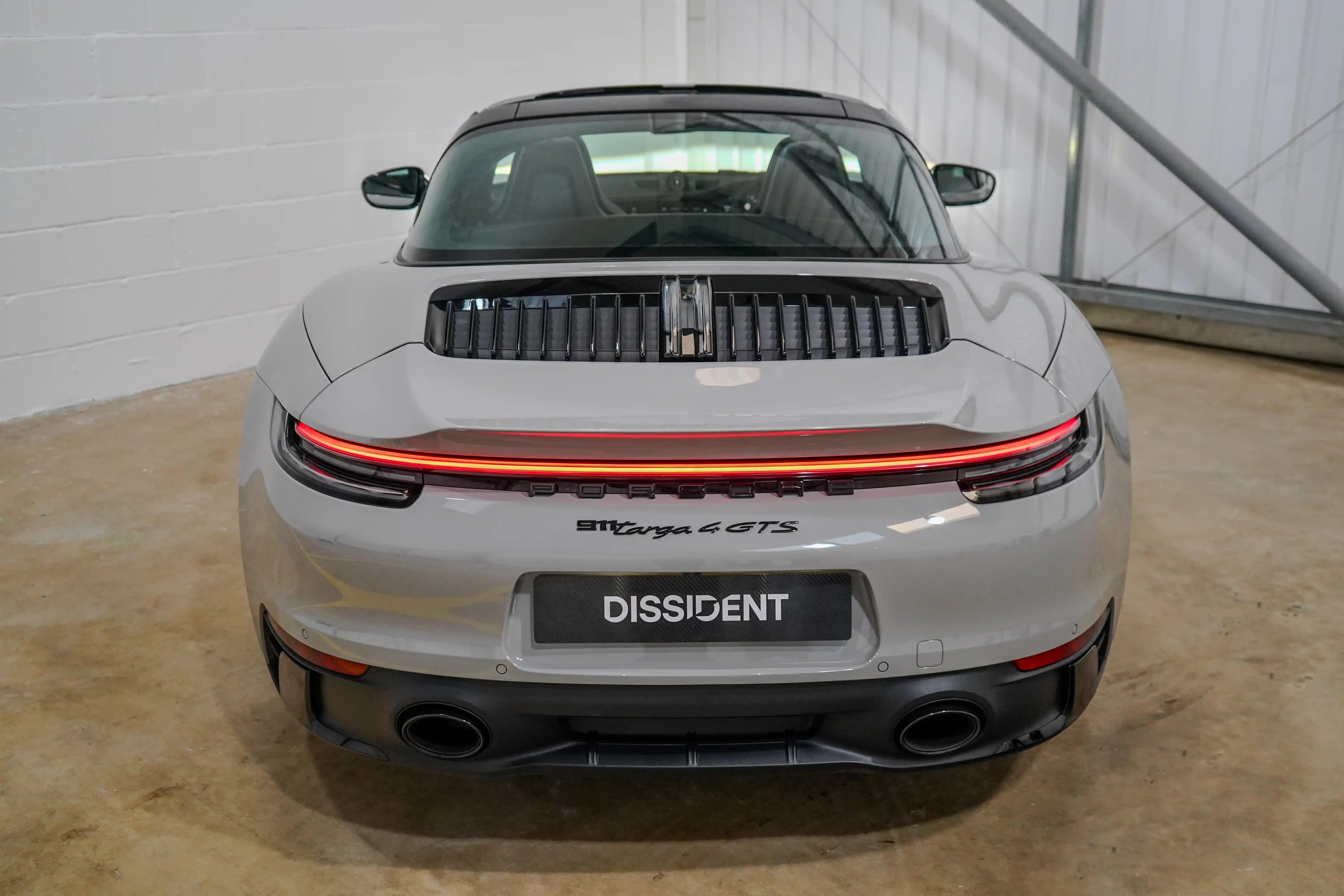
Which carbon parts fit a Porsche Targa or Cabriolet, why the 992 needs its own ducktail, and the part built for roof-down driving.
Read article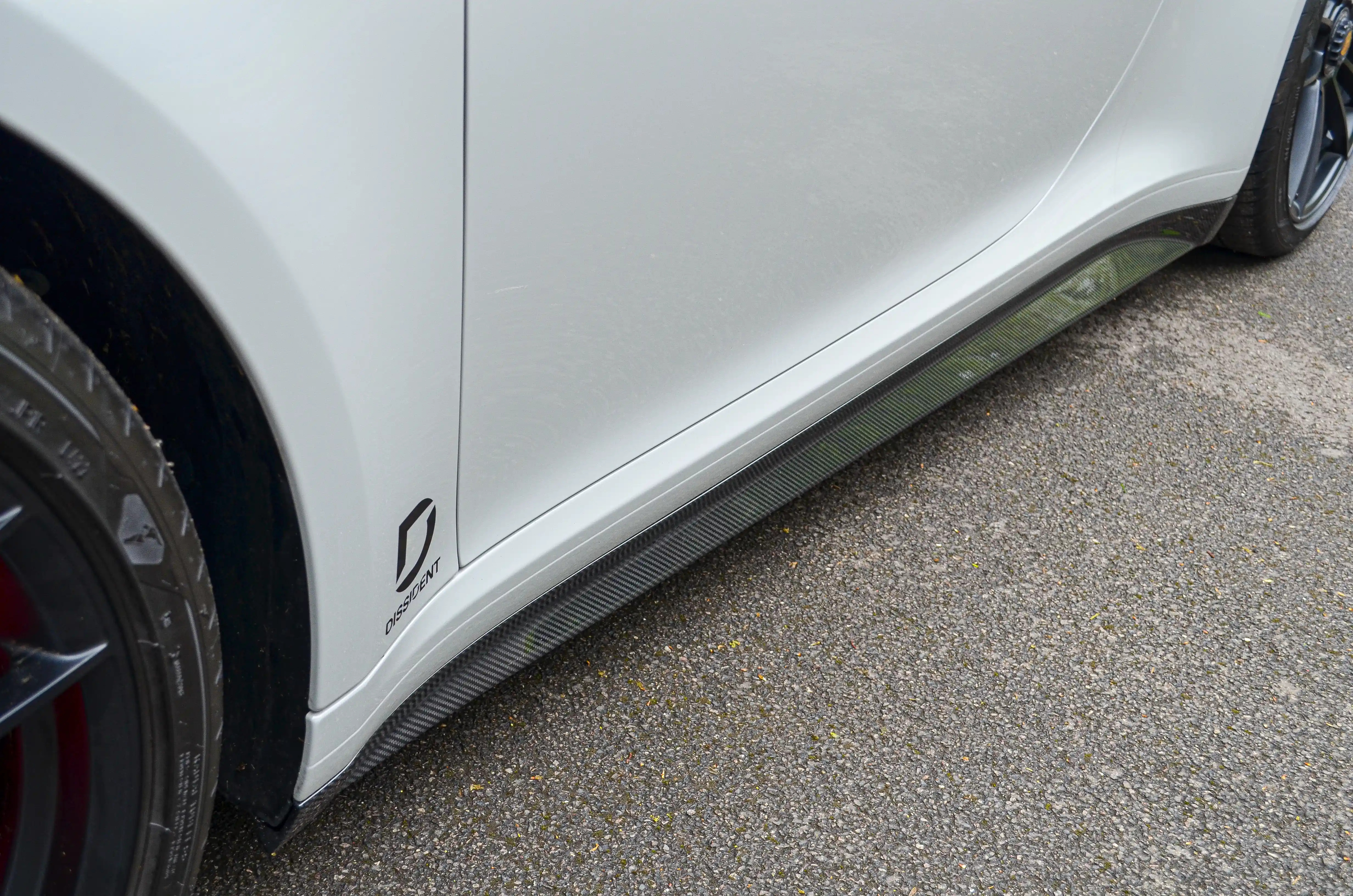
Side skirts, door triangles and fuse covers change a 911 more than their price suggests. What each does, what it costs and what to check.
Read articleA splitter is a flat horizontal shelf at the bottom of the front bumper. Air stalls above it and speeds up underneath, so pressure builds on top and drops below, and that difference presses the front of the car down. The underside does most of the work, which is why ride height affects a splitter more than its shape does.
An air dam is vertical and blocks air from passing under the car. A splitter is horizontal and generates downforce from the pressure difference across it. A lip is a shallow extension of the bumper that does a little of both. Most road car parts sold as splitters are lips, which is usually the right choice on a road car.
Modestly. Aerodynamic force rises with the square of speed, so a part doing useful work at 120mph is doing very little at 40. On a road car a splitter or lip changes the look and stance far more than the handling. Front aero also has to be balanced against rear aero, or the car moves towards understeer.
The bumper variant decides, not the model year. On a 992.1 the standard base bumper and the Sport Design bumper take different parts, and a 992.2 Sport Design bumper takes its own front lip. On a 718 GT4 the front end splits into a centre section and separate side vents or aero curtains.
No. Our front splitters and lips replace the original plastic on the original mounting points, with no cutting, drilling or bonding. Fitment takes minutes and is fully reversible, so the car can go back to standard before it is sold. Professional fitment is still recommended.