992 Collection
991 Collection
718 Collection
Wheels
Accessories


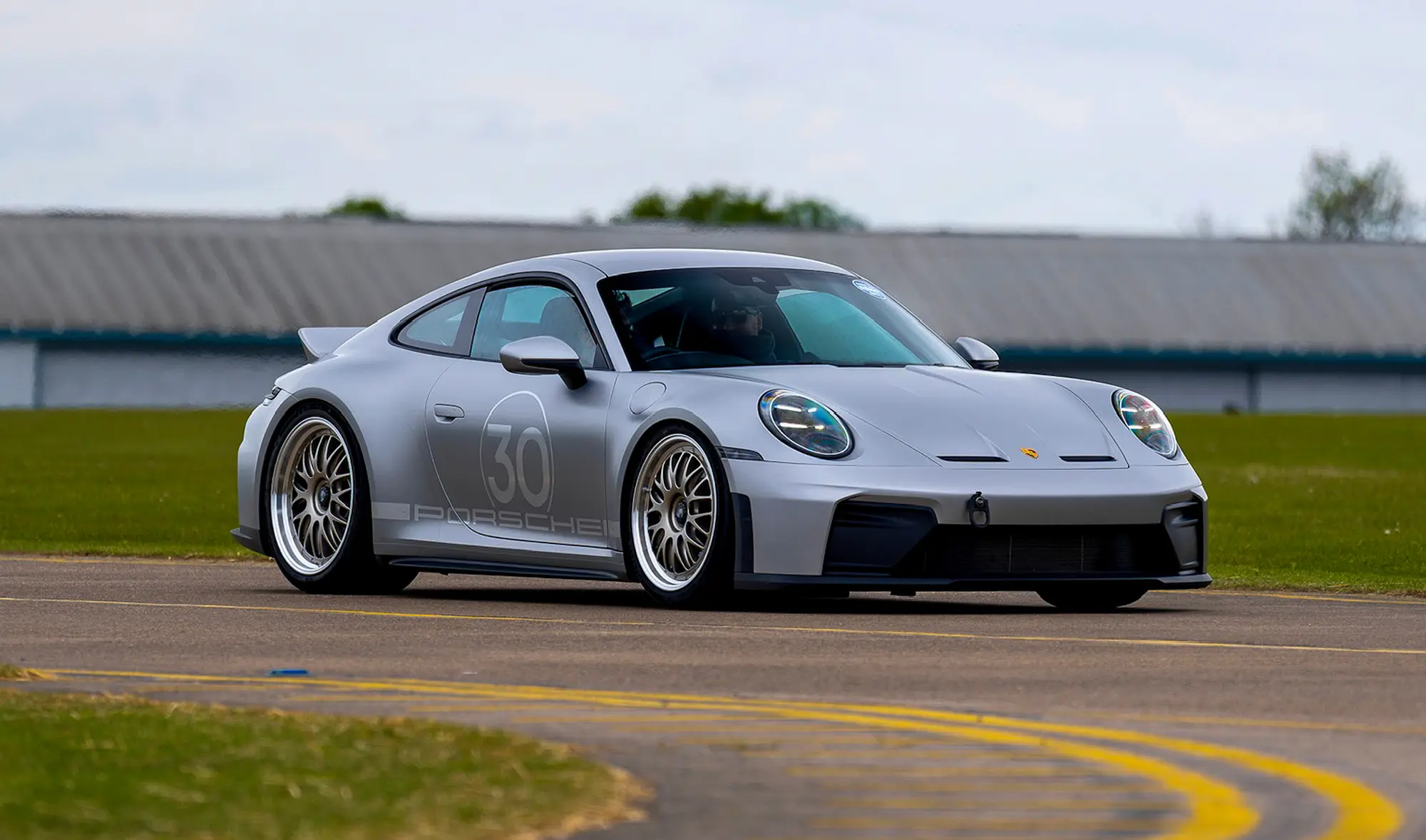
A Porsche 992 GT3 arrives with its aerodynamics finished. The swan-neck wing, the closed diffuser and the underbody are one system, set together at the factory, and there is nothing sensible to bolt onto it. The upgrade path on a GT3 is material and detail: carbon where the factory left plastic, in the weave the car already wears.
That is a narrower brief than most 911 upgrade guides admit to, and it is the honest one. It is also the reason a GT3 rewards small parts more than big ones. Every panel Porsche left in plastic sits next to something already made of carbon, so the swap shows.
This guide covers what fits a winged 992 GT3, what opens up on a GT3 Touring, what each part costs, and which parts in the range are built for Carrera bodies and will not go near a GT3 at all.
Every fitment line below comes off our own product pages. Prices are the current ranges across finishes.
Four part families fit any 992 GT3, winged or Touring: standard door triangles, anti-buffet door triangles, side sills and GT3 fuse cover panels. A GT3 Touring adds both ducktails, because the Touring runs a Carrera-style deployment spoiler rather than a fixed wing. Front splitters, diffusers and engine covers in the range are Carrera parts and do not fit.
Set out in order of price, that is £300 to £475 for a pair of door triangles, £395 to £495 for the fuse covers, and £2,390 to £2,850 for the side sills. On a Touring the mini ducktail runs £1,625 to £2,500 and the fixed ducktail £3,350 to £4,300.
Most owners work up that list rather than down it. The triangles and fuse covers are an afternoon and a few hundred pounds. The sills change the profile of the car. The ducktail changes the whole rear end, and only the Touring can have it.
Worth knowing what you are starting with before you consider adding to it.
The 992 GT3 was the first road-legal Porsche to use a swan-neck rear wing, hung from above so the underside of the wing works in clean air. Underbody panels feed a fully enclosed rear diffuser, which is worth around 60 kg of downforce on its own. Vents behind each rear arch dump pressure out of the wheel housings.
The result is around 50% more downforce than the 991.2 it replaced, and up to 150% more in the high downforce setting. Porsche got there across more than 160 hours and 700 wind tunnel simulation sessions.
There is already a lot of carbon on the car too. The bonnet, roof and rear wing are carbon from the factory, which is how a 992 GT3 lands at 1,435 kg carrying more technology than the last one. The 992.2 cars went further, with a redesigned front diffuser, a revised spoiler lip and modified underbody air guides.
Two things follow from that. The wing and the front diffuser are set together in four matched positions, so changing one without the other unbalances the car. And because the factory carbon is right there on the roof and the mirrors, anything you add has to match its weave or it looks bolted on.
The door triangles sit behind each mirror and the fuse covers sit in each footwell, and both replace factory plastic on factory mounting points. Standard triangles are £300 to £400 a pair, anti-buffet triangles £375 to £475, and GT3 fuse covers £395 to £495. Nothing is cut, drilled or bonded, and all of it comes off again.
The standard door triangles are made for 992 Turbo, GT3 and Carrera cars. They are the flat version, and they read as the quieter of the two. The anti-buffet triangles add the aero lip that cuts wind noise with the roof back or a window down, which matters more on a car driven with the windows open.
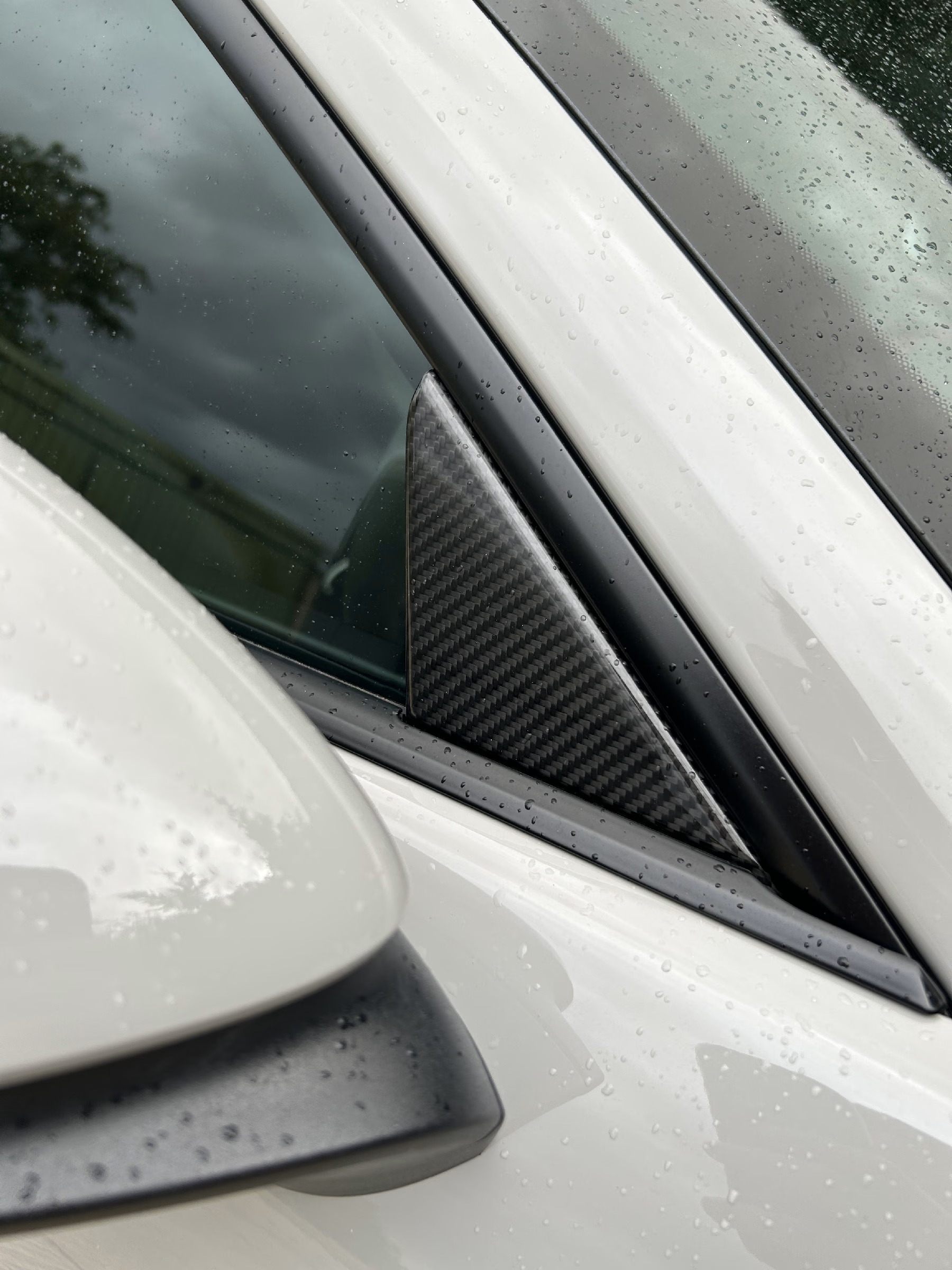
The reason to start here is proximity. Porsche puts high-gloss carbon on the GT3's mirror upper shells and mirror triangles, so the plastic panel a few inches away is the most visible unconverted piece on the car. Change it and the whole mirror assembly reads as one thing.
The fuse covers are the same argument indoors. GT3 cars most commonly carry a 1x1 plain weave, which is the finish used on the GT3 version of the covers, so they match what is already in the cabin rather than fighting it.
The side sills are the one body panel in the range built to fit a GT3 as well as a Carrera. They replace the plastic rocker panels along each flank, and they are the part that changes the car's stance from ten paces rather than on close inspection.
Fitment is on the original mounting points, it takes minutes, and it is fully reversible. Ground clearance drops by 20mm, which is the number to check against your driveway, your trailer ramp and the multi-storey you use most.
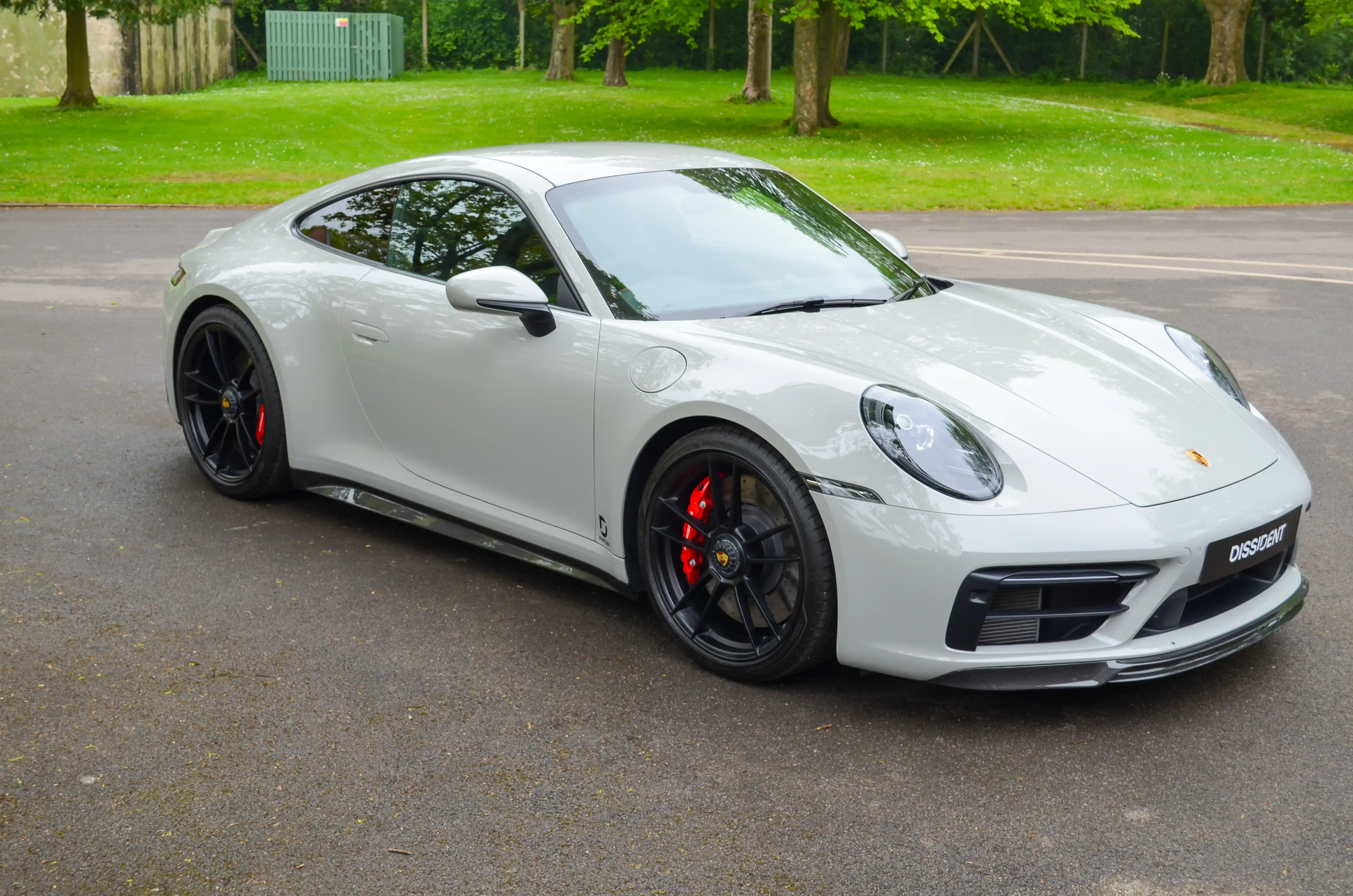
The 992 side sills run £2,450 to £2,850 for 992.1 and £2,390 to £2,790 for 992.2, depending on finish. They pair with the rear diffuser on Carrera cars, though on a GT3 the rear is already resolved, so they work on their own down the side of the car.
Order them at the same time as anything else you want in visible carbon. Cloth runs vary between batches, and parts made together sit better next to each other than parts bought a year apart.
Only to a GT3 Touring. The Touring deletes the fixed rear wing and runs the automatically controlled deployment spoiler from the Carrera Cabriolet, with an added Gurney flap. That deployment panel is the plastic cover our ducktails replace. A winged GT3 has no equivalent panel, and neither ducktail is suitable for cars fitted with an aero kit fixed wing.
Which makes the Touring the most interesting car in the 992 range for what we build. At the back it is a Carrera-bodied car, so it takes both ducktails as well as the sills, triangles and fuse covers.
There is a neat loop in it. The Touring designation goes back to an equipment variant of the 1973 911 Carrera RS 2.7. The ducktail came off the same car. Putting one on the other is not fancy dress, it is two halves of the same 1973 idea back together.
Porsche made the Touring available from launch on the 992.2 for the first time rather than as a later addition, so there are more of these cars about than there used to be. Their owners tend to want the same thing: the GT3 underneath, none of the shouting on top.
The mini ducktail keeps the factory spoiler motor and mechanism, so the panel still rises and drops as it did before. No electrical work, and it comes off in minutes. The fixed ducktail needs the whole deployment unit removed and coded out so the dash does not throw a spoiler error. One is a change of clothes. The other is a decision.
The mini ducktail fits 992.1 and 992.2 Carrera coupes and the GT3 Touring, at £1,625 to £2,500. It is the reversible option: the car can wear it all summer and go back to standard in an afternoon before it is sold.
The GT3 Touring fixed ducktail is the bolder shape at £3,350 to £4,300. It fits 992 Carrera bodied cars including GT3 Touring across both generations, it is intended for road use, and it needs coding as part of fitment.
How to choose. If the car is moving on in a couple of years, or you want the option of putting it back exactly as it was, take the mini. If it is a keeper and you want the rear to read as one continuous shape rather than a panel sitting on a mechanism, take the fixed one and accept the coding.
Both come in gloss lacquered visual carbon, bare carbon, body colour, or body colour with a carbon accent, and there is a herringbone option if you want the centre line to read differently.
If the goal is lap time on a winged GT3, a Porsche 911 aero kit is the right answer rather than anything we make. The Manthey Kit for the 992.2 GT3 reworks the entire underbody into one aerodynamic element and adds a wider swan-neck wing with a Gurney flap, and Porsche quotes it as nearly three seconds quicker at the Nürburgring.
Porsche's own figures describe turning vanes running roughly 59 inches under the car, around 39 inches longer than standard. That is developed by the people who built the car, and no bolt-on wing gets near it.
We do the other job. Material, proportion, and how the car looks parked at eight in the morning. Those are different aims and there is no shame in saying which one you are buying.
Everything we make is autoclave-cured pre-preg carbon, hand-built in the UK, in a 2x2 twill matched to the weave Porsche uses on its own mirrors and roof panels. Pre-preg means the cloth arrives with the resin already measured into it. An autoclave cures the part under heat and pressure together. Between them you get a part that holds its shape and its finish rather than dulling after a few summers.
Every part ships with a written fitting guide, and there is a technical team on the contact form for fitting questions. Professional fitment is recommended throughout, and the fixed ducktail in particular is better done by someone who has coded one out before. Parts in stock go out quickly. Parts built to order are dispatched within 14 to 35 days.
Three things to take away. Check the fitment line before the price, because most 992 aero is built around Carrera bumpers. On any GT3 the sensible carbon is triangles, fuse covers and sills, and it starts at £300. And if you have a Touring, you can have the ducktail as well, which is the one upgrade on this list that changes the car's whole silhouette.
Start with the GT3 Touring fixed ducktail.
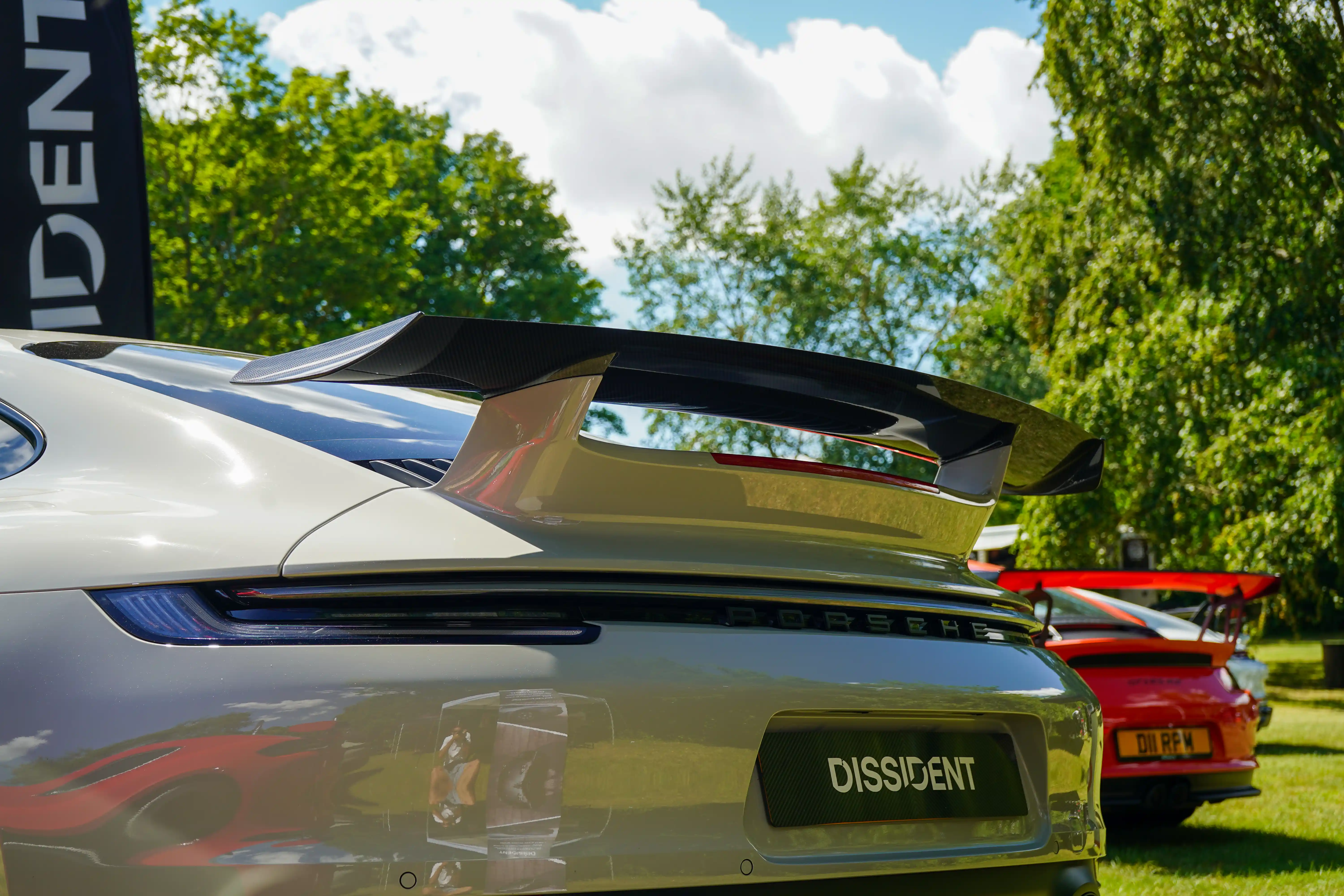
A GT wing works the air above the car, a ducktail changes where it leaves. What each does, what fits, and which suits your Porsche.
Read article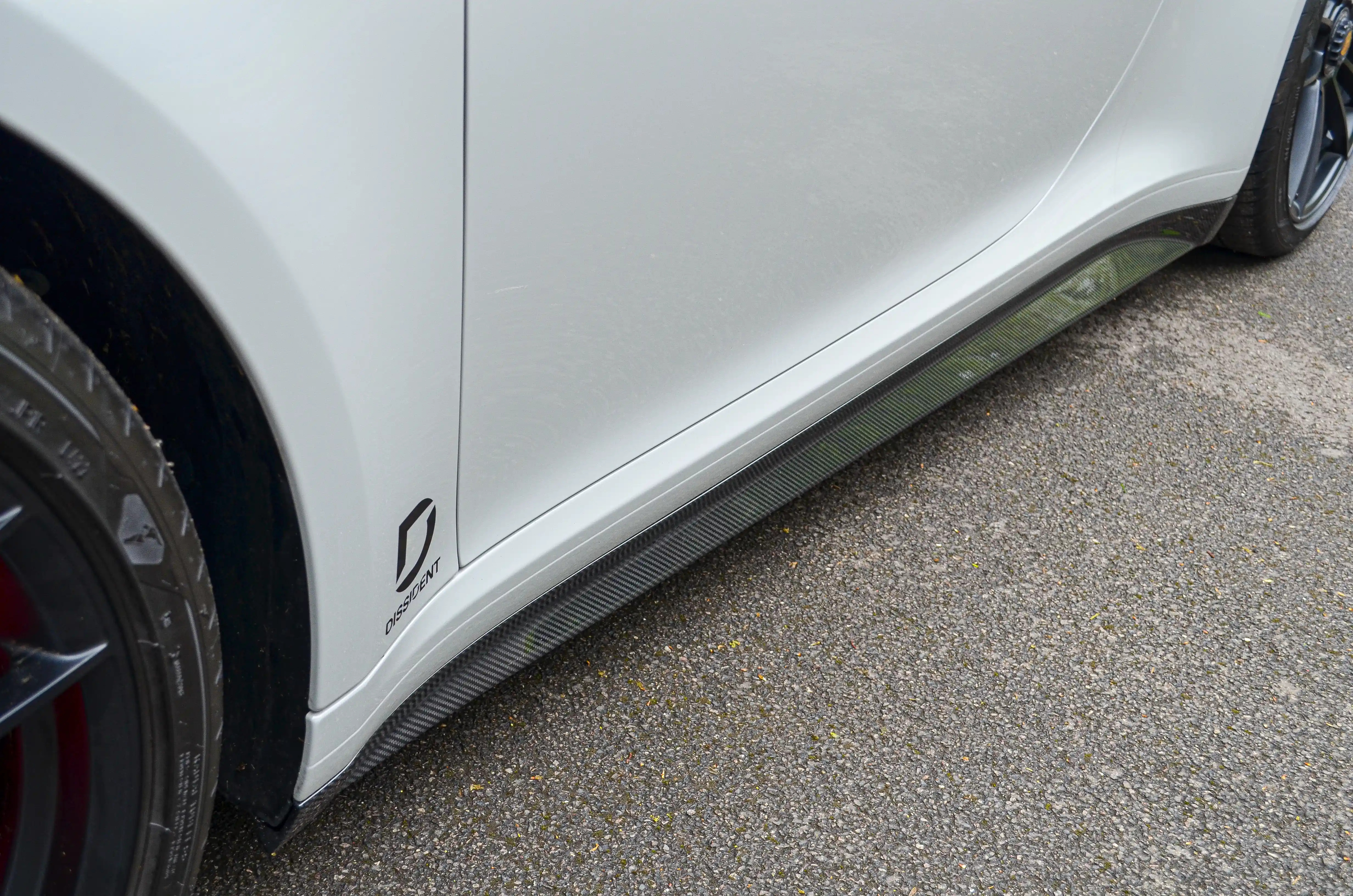
Side skirts, door triangles and fuse covers change a 911 more than their price suggests. What each does, what it costs and what to check.
Read article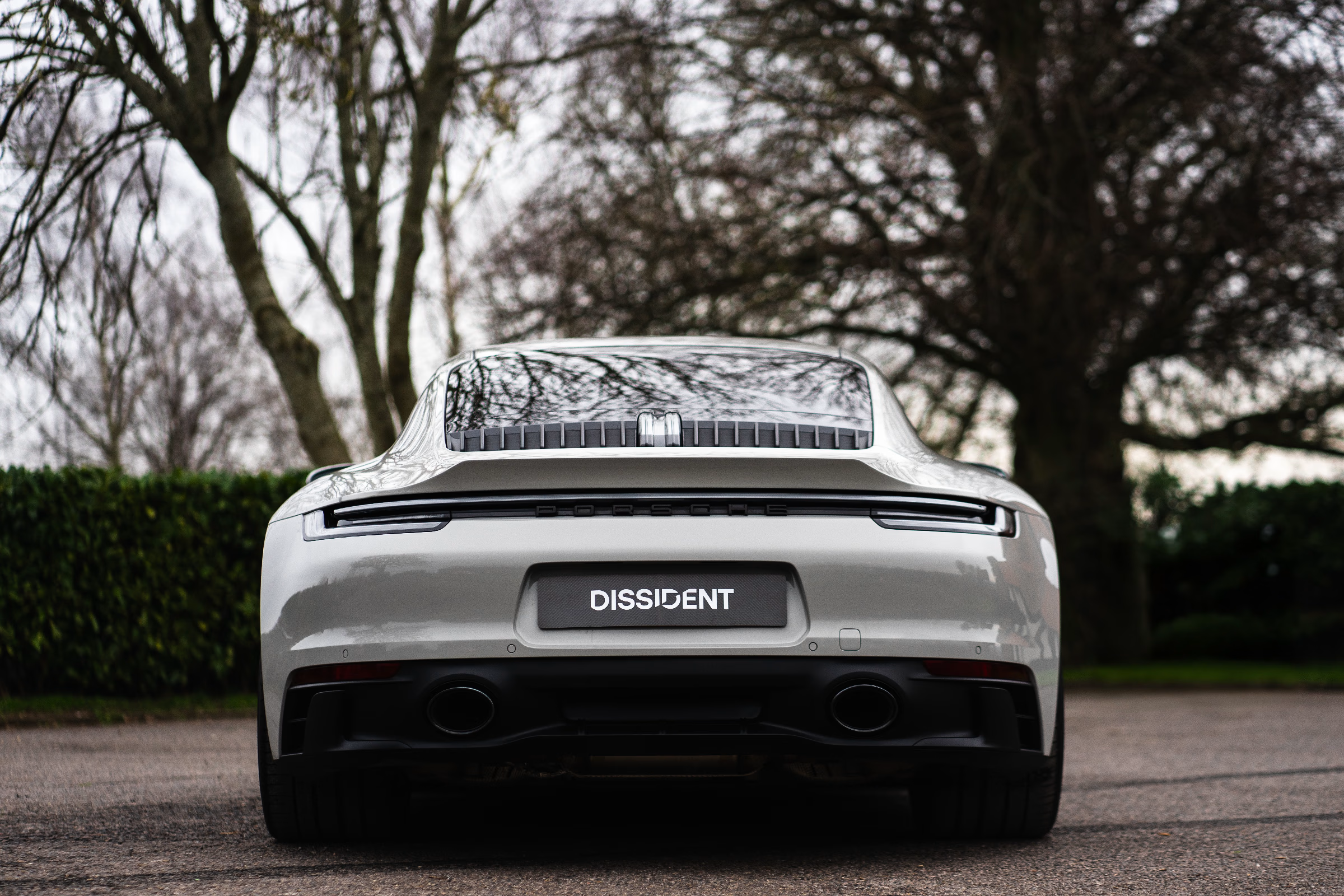
The ducktail spoiler started as a fix for 911 lift in 1972. Where it came from, what it changed, and why it still suits a modern 911.
Read articleFour part families fit any 992 GT3: standard door triangles, anti-buffet door triangles, side sills and GT3 fuse cover panels. A GT3 Touring adds both ducktails, because it runs a Carrera style deployment spoiler rather than a fixed wing. The front splitters, diffusers and engine covers in the range are built around Carrera bumpers and will not fit.
Only a GT3 Touring. The Touring runs the same deployment spoiler as a Carrera Cabriolet, and that panel is the part our ducktails replace. A winged GT3 has a fixed rear wing instead, and neither ducktail is suitable for cars fitted with an aero kit fixed wing.
Yes. The fixed ducktail needs the deployment spoiler unit removed completely, and the car then has to be coded so the dashboard does not show a spoiler error. The mini ducktail avoids this by leaving the motor and mechanism in place. Professional fitment is recommended either way.
Yes. They are made for all 992.1 and 992.2 Carrera models plus GT3 and GT3 Touring, and they replace the plastic rocker panels on the original mounting points. Fitment takes minutes with no cutting, drilling or bonding, and it is reversible. Ground clearance is reduced by 20mm, and prices run from £2,390 depending on generation and finish.
The parts we make for the GT3 are material upgrades rather than aero parts. Side sills, fuse covers and ducktails change what the car is made of and how it looks. If you want more downforce on a winged GT3, a factory developed kit is the right route, because front and rear aero on that car are set together in matched positions.