992 Collection
991 Collection
718 Collection
Wheels
Accessories


Carbon fibre is stronger than steel by weight, and weaker than steel in ways that matter. Both are true, which is why the question keeps getting answered badly. Here is what the numbers say, how the material is made, and which properties matter on a car panel rather than in a lab.
Every carbon product page in the world opens with the same three claims. Stronger than steel. Lighter than aluminium. Used in Formula 1.
None of it is untrue. None of it tells you much either. Strength is not one number, and a material can beat steel by a factor of five in one direction while failing without warning in another. A spoiler cover is also not asked to do the job of a chassis rail.
So here is the version with the caveats left in. What the comparison really says, how the material gets made, where steel still wins, and what any of it means when the part in question sits on the back of a 911.
By weight, comfortably. Carbon fibre reaches tensile strengths of roughly 3,500 to 7,000 MPa, against 400 to 1,200 MPa for most steels. It is also about five times lighter, at around 1.6 g/cm³ against 7.85. Divide one by the other and carbon wins by a wide margin.
That ratio is the whole reason the material exists. Specific strength, meaning strength divided by density, is where composites leave metals behind, and it is why aerospace and motorsport pay what they pay for it.
The catch is direction. Steel is much the same in every direction. A carbon laminate is only strong along the fibres, so the same panel can be extraordinarily stiff one way and unremarkable across it. That is a design tool rather than a flaw, but it means "stronger than steel" is a sentence with a missing clause.
Stiffness tells a similar story. Steel sits consistently around 200 GPa, while carbon runs anywhere from 70 to nearly 300 GPa depending on the fibre grade and how it is laid up. You can specify carbon to be stiffer than steel or softer than steel. You cannot do that with a sheet of metal.
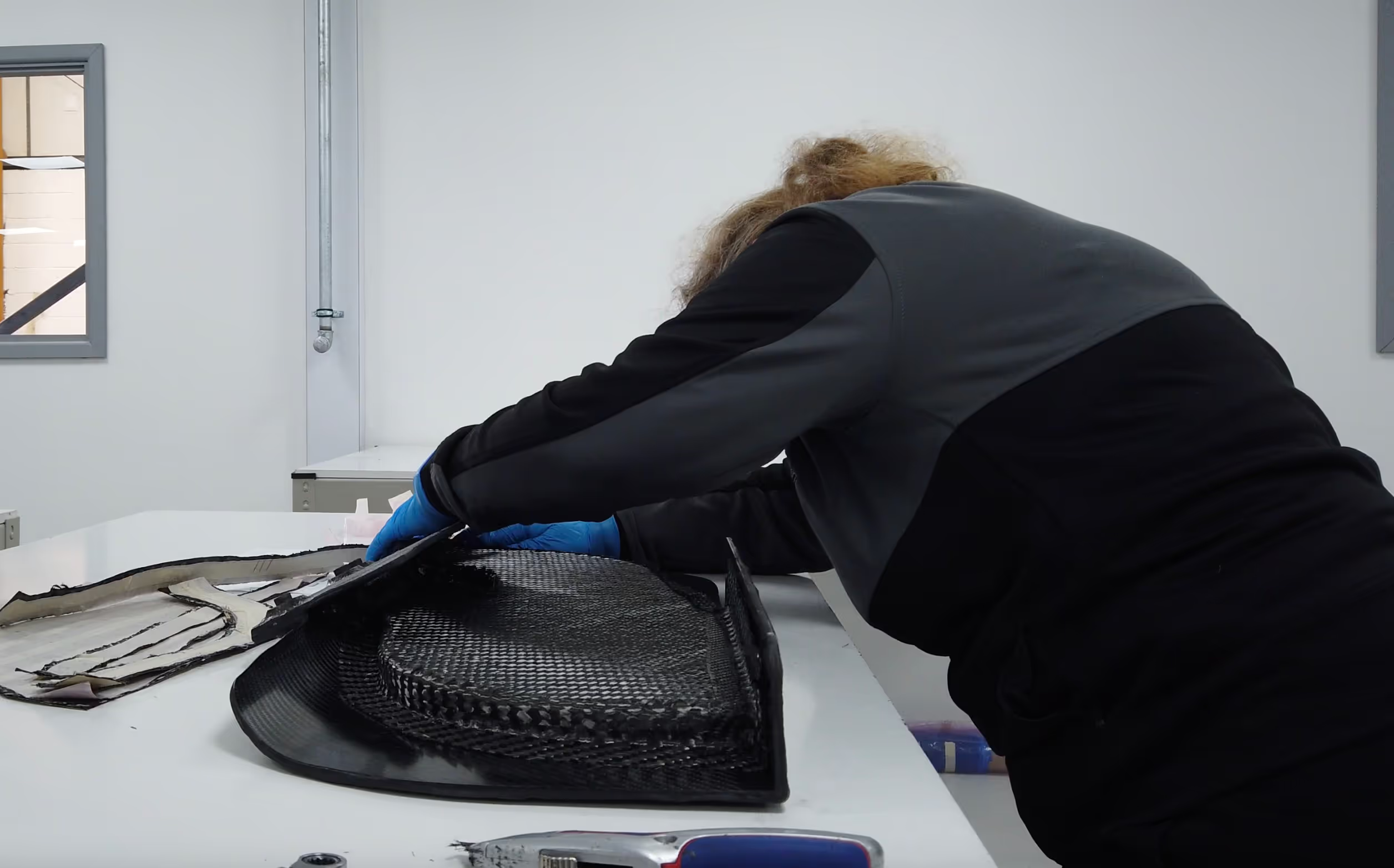
Almost all of it starts as a plastic. Acrylonitrile is polymerised into polyacrylonitrile, spun into a fibre, then stabilised in air at 200 to 300°C so it will not melt later. It is then carbonised in an oxygen-free furnace, driving off everything that is not carbon and leaving a fibre that is more than 90% carbon.
The stabilising stage is the slow one, taking anywhere from half an hour to two hours in air ovens. It rearranges the polymer into a ladder structure that survives what comes next.
Carbonisation runs in an inert atmosphere, usually nitrogen, at anywhere from 1,000 to 3,000°C. Hydrogen, oxygen and nitrogen leave as gas. What remains is carbon crystals aligned along the length of the fibre, which is where the strength comes from. Push the temperature higher and you get a stiffer, more graphitic fibre.
The fibres are then surface treated and sized so resin will bond to them, and woven into cloth. A 3K tow, the common automotive specification, is 3,000 individual filaments bundled together.
Worth holding on to that last part. Everything above produces fibre. Fibre on its own is a bundle of thread. It only becomes a part when resin and pressure turn it into a laminate, and that is where most of the difference between one carbon part and another gets decided.
Three places, and they are not small.
Failure behaviour is the big one. Steel is ductile: it bends, deforms and gives you warning before it goes. Carbon has no yield point and fails brittle, holding its shape right up until it does not. For a crash structure that difference is everything, which is why carbon monocoques are engineered with crushable structures around them rather than relied on to fold.
Compression and bending are the second. Steel handles compressive and flexural loads better for its volume, which is why bridges are not made of carbon fibre.
The third is repair and cost. A dented steel panel can be pulled and filled by any body shop. A cracked carbon panel needs a composite specialist, or replacing.
None of that argues against carbon on a car. It argues for using it where its properties are the ones you want.
A spoiler, a splitter or a door triangle is not a structural component. Nothing on the car depends on it holding a load. What you want from it is stiffness for its weight, dimensional accuracy so it fits, and a surface that stays flat and glossy for years. Tensile strength barely comes into it.
Dimensional accuracy is the underrated one. A panel that comes out of the mould slightly off will show up as an uneven gap along the edge of a wing, and no amount of tensile strength fixes a bad panel gap.
Stiffness matters because a floppy panel drums and buzzes at speed. A well-consolidated carbon panel is rigid enough to sit still without needing the mass a plastic one would need to do the same job.
And surface stability is what you are still looking at in five years. Sunlight attacks the resin and the lacquer rather than the fibres, so the finish decides how a part ages far more than the material headline does.
Two parts can use identical cloth and behave completely differently, because the fibre is only half the composite.
Wet lay-up brushes resin onto dry cloth by hand. The ratio ends up wherever the operator's hand puts it, usually near 50:50, and resin is the heavy component that contributes almost nothing structurally. Pre-preg arrives with the resin already measured into the cloth by machine, which pushes the fibre content up and the weight down.
Curing does the rest. An autoclave applies heat and pressure together, squeezing the plies into each other and forcing out trapped air. The air pockets left behind are called voids, and they are the single best predictor of whether a laminate performs like the datasheet or like a disappointment.
This is why we make parts the way we do, and why our carbon fibre car parts are made in the UK rather than bought in from wherever the cloth is cheapest. Same fibre, different process, different part.
Take the ducktail. It replaces a plastic spoiler cover with a panel that is lighter, holds its shape better, and carries a 2x2 twill weave matched to the carbon Porsche already fits to the mirrors and roof.
Is it stronger than steel? Yes, per kilogram, and it does not matter, because the OEM part was plastic and nothing structural runs through it. What matters is that the part fits on the original mounting points, that it does not warp, and that it still looks right after five summers.
That is the honest case for carbon on a road car. Not that the material is invincible, but that it is the right material for panels where weight, stiffness and finish are the job.
Everything we build is autoclave-cured pre-preg carbon, hand-made in the UK. Parts in stock go out quickly, and parts built to order are dispatched within 14 to 35 days.
The 991.2 ducktail is a good place to see what that looks like.

A GT wing works the air above the car, a ducktail changes where it leaves. What each does, what fits, and which suits your Porsche.
Read article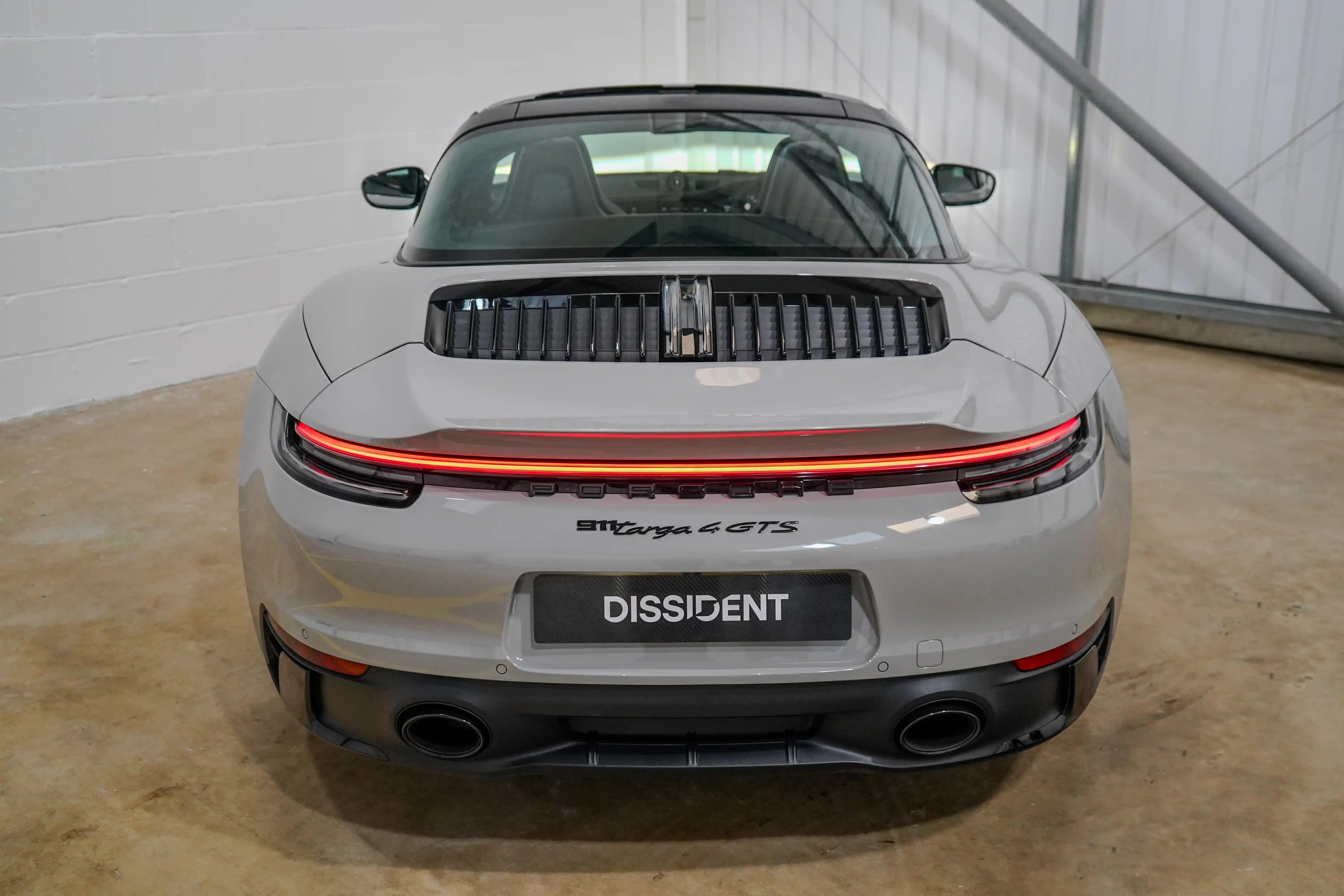
Which carbon parts fit a Porsche Targa or Cabriolet, why the 992 needs its own ducktail, and the part built for roof-down driving.
Read article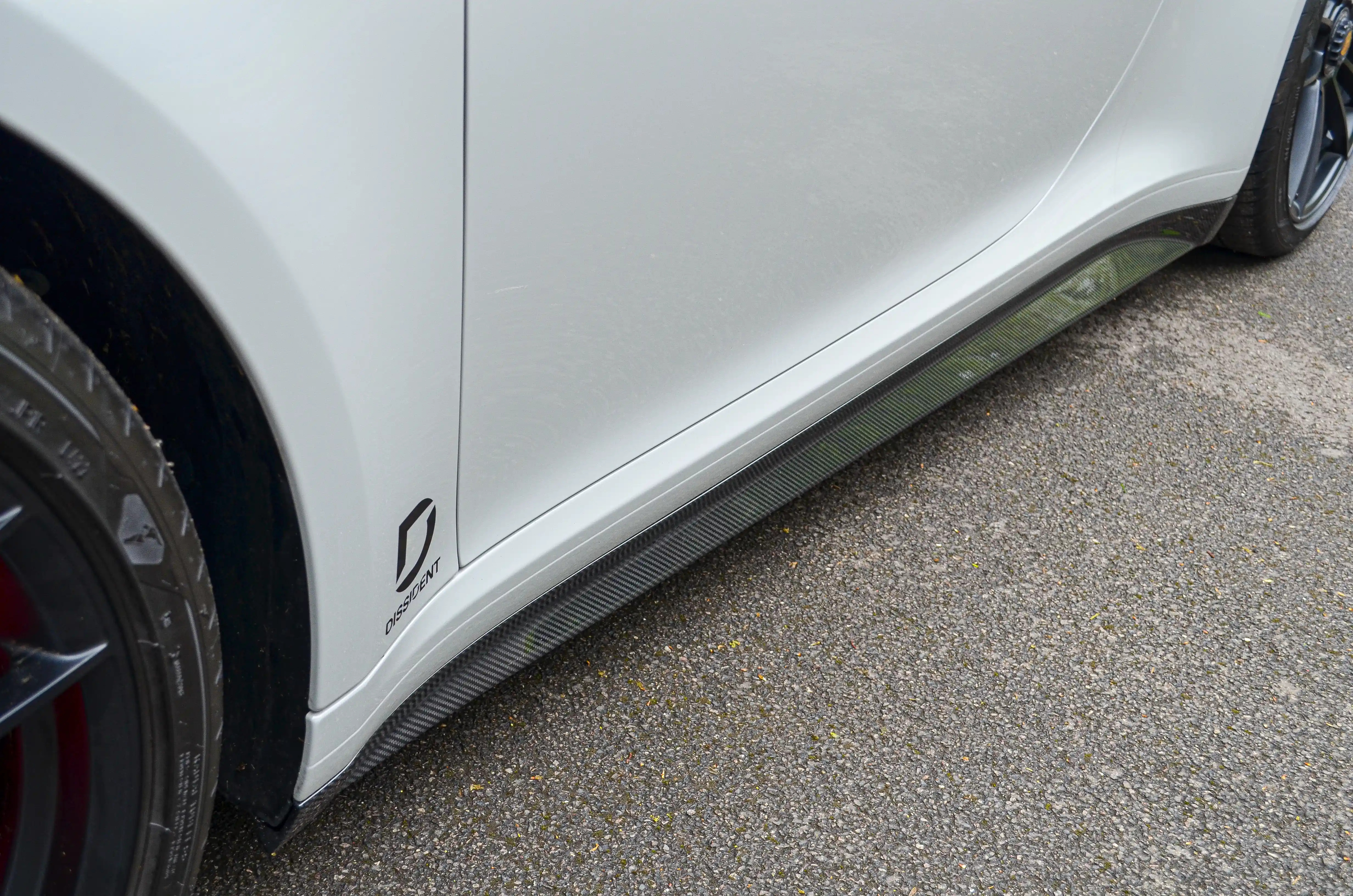
Side skirts, door triangles and fuse covers change a 911 more than their price suggests. What each does, what it costs and what to check.
Read articleBy weight, yes. Carbon fibre reaches tensile strengths of roughly 3,500 to 7,000 MPa against 400 to 1,200 MPa for most steels, and it is around five times lighter. The comparison is direction dependent though, because a carbon laminate is only strong along its fibres while steel behaves the same way in every direction.
Most carbon fibre starts as a plastic. Acrylonitrile is polymerised into polyacrylonitrile, spun into a fibre, then stabilised in air at 200 to 300 degrees so it will not melt later. It is then carbonised in an oxygen free furnace between 1,000 and 3,000 degrees, which drives off everything that is not carbon and leaves a fibre over 90% carbon.
Steel bends and deforms before it breaks, giving warning. Carbon has no yield point and fails brittle, holding its shape until it does not. Steel also handles compression and bending better for its volume, and a dented steel panel can be repaired by any body shop while a cracked carbon panel needs a composite specialist.
Very little, because a spoiler or splitter is not structural. What matters on a body panel is stiffness for its weight, dimensional accuracy so the panel gaps sit right, and a surface finish that holds up in sunlight. Tensile strength barely comes into it.
Yes, and the gap is significant. Wet lay-up brushes resin on by hand and typically ends near a 50:50 fibre to resin ratio, which adds weight without adding strength. Pre-preg cloth arrives with the resin measured in by machine, and curing it in an autoclave under heat and pressure forces out the trapped air that weakens a laminate.