

OEM+ is a badge anyone can print. On a carbon fibre part it should mean the part replaces a factory component, sits on the factory mounting points, and is built to a standard Porsche would recognise. Here is how to tell which parts clear that bar, and which are a carbon-look sticker on the plastic you already own.
Search for carbon fibre car parts and you will find the same named part at £300 and at £3,000. A front splitter. An engine cover. Both listings say carbon fibre. Both show a weave in the photographs.
The gap is not margin. It is material, process, and what sits under the surface you can see.
Most of what sells as carbon fibre is a look. Vinyl film. A printed pattern floated onto plastic. Fibreglass with a thin carbon face bonded on top. All of it photographs well. None of it does the job the material is famous for.
This is a buyer's guide written from a workshop that makes the stuff. What OEM+ means. What separates a real part from a carbon-look one. And the checks you can run before you spend anything. Some of it will save you money. Some of it will tell you when the cheap option is the right call, because sometimes it is.
OEM+ means a modification that reads as factory. On a carbon part it should mean a direct replacement for an original component, fitted on the original mounting points, finished to the standard the manufacturer uses on its own carbon. The term is worth nothing unless the seller says what the part is made from and how.
Among enthusiasts the strict version is narrower. OEM+ traditionally means parts from higher-specification models in the same range, fitted so the result looks like a factory option that was never offered. Nobody outside the club notices. That is the point.
The term has drifted. It now sits on anything sold to owners who want the modified car to still read as standard, which includes plenty of parts that would fall apart next to a factory panel. We use it because it describes the intent: a car that looks like Porsche built it that way. Intent is cheap though. What matters is what happens when you hold the part.
Ask one question and it settles quickly. What is this part made from, and how was it cured? A maker answers in a sentence. A reseller talks about quality instead.
A real carbon part is carbon cloth and resin all the way through, cured into shape in a mould. Five things get sold as carbon fibre and are not: vinyl wrap, hydrographic dip, painted plastic, fibreglass with a printed weave, and a thin carbon skin bonded over a cheaper base.
Vinyl wrap is a film with a weave printed on it, stuck to the part you already have. Hydrographic dipping floats a printed pattern on water and transfers it onto the surface. Both are paint by another name. Neither adds strength, stiffness or weight saving.
Painted plastic is the crudest of the five. Standard ABS in black or grey with a lacquer over it, sold on a photograph taken at the right angle. Fibreglass with a printed weave is a step up in strength and a step down in weight, which is the wrong way round.
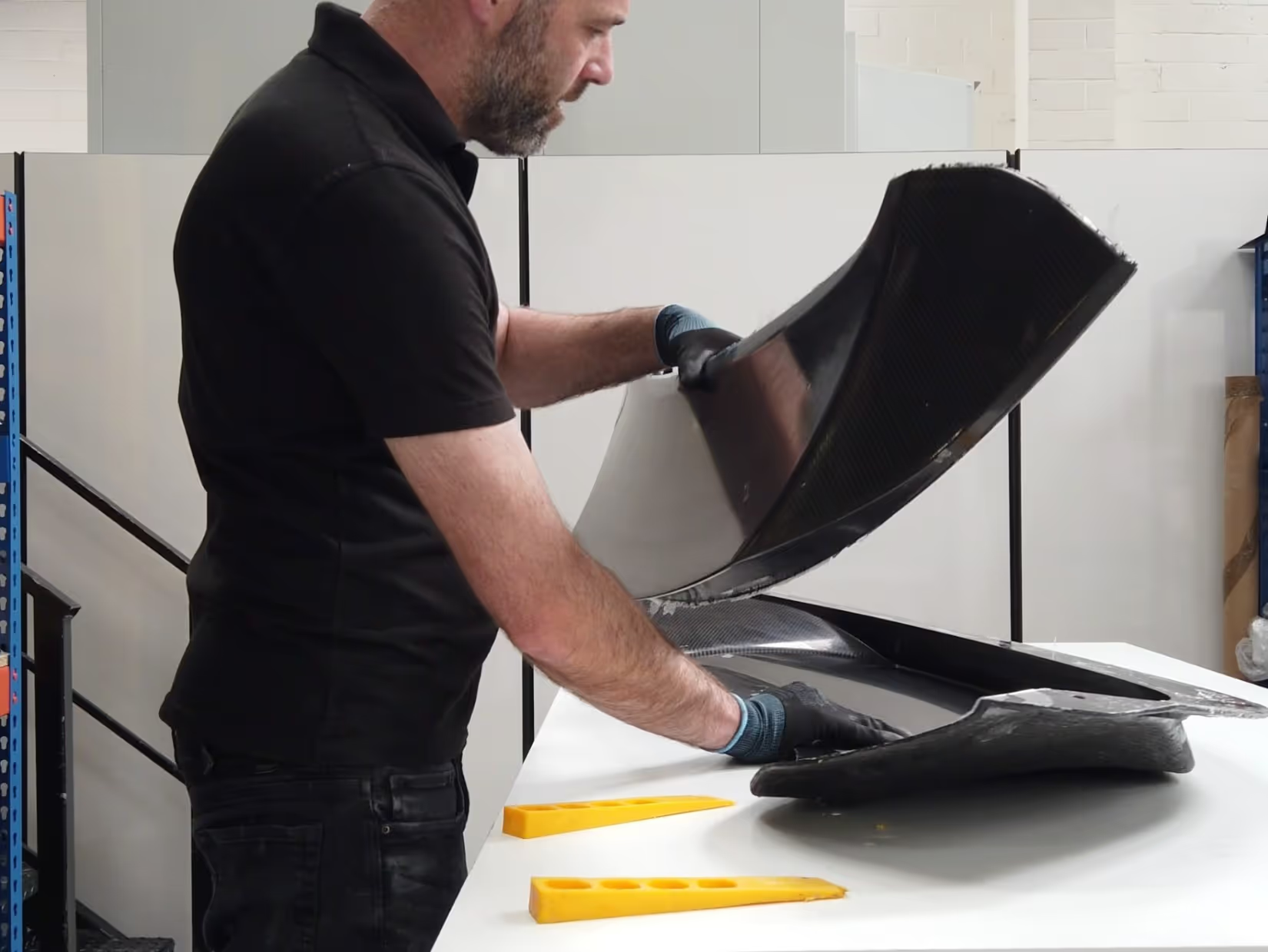
The one that catches people out is the carbon skin. A thin layer of real carbon goes over a fibreglass or plastic base, so the surface passes every visual test while the part underneath is something else. These turn up most often in low-cost body kits, and they lift at the edges after a few years.
Fibreglass with a carbon face is heavier than the factory part it replaces. That is the tell. If a carbon panel weighs the same as the plastic it swapped out, or more, you have not bought carbon.
Two words decide most of this, and they belong on the product page.
Pre-preg is carbon cloth that arrives with the resin already worked into it, measured by machine. Wet lay-up is the alternative: dry cloth in a mould, resin brushed on by hand. The difference is control. Wet lay-up tends to land near a 50:50 mix of fibre to resin, and resin is the heavy part that does none of the work.
An autoclave is a pressurised oven. It cures the part under heat and pressure at the same time, squeezing the layers together and pushing out trapped air. What you are chasing is void content, the small pockets of air left inside the laminate. Aerospace works to a threshold of under 1%, and autoclave curing is the process that reliably gets there.
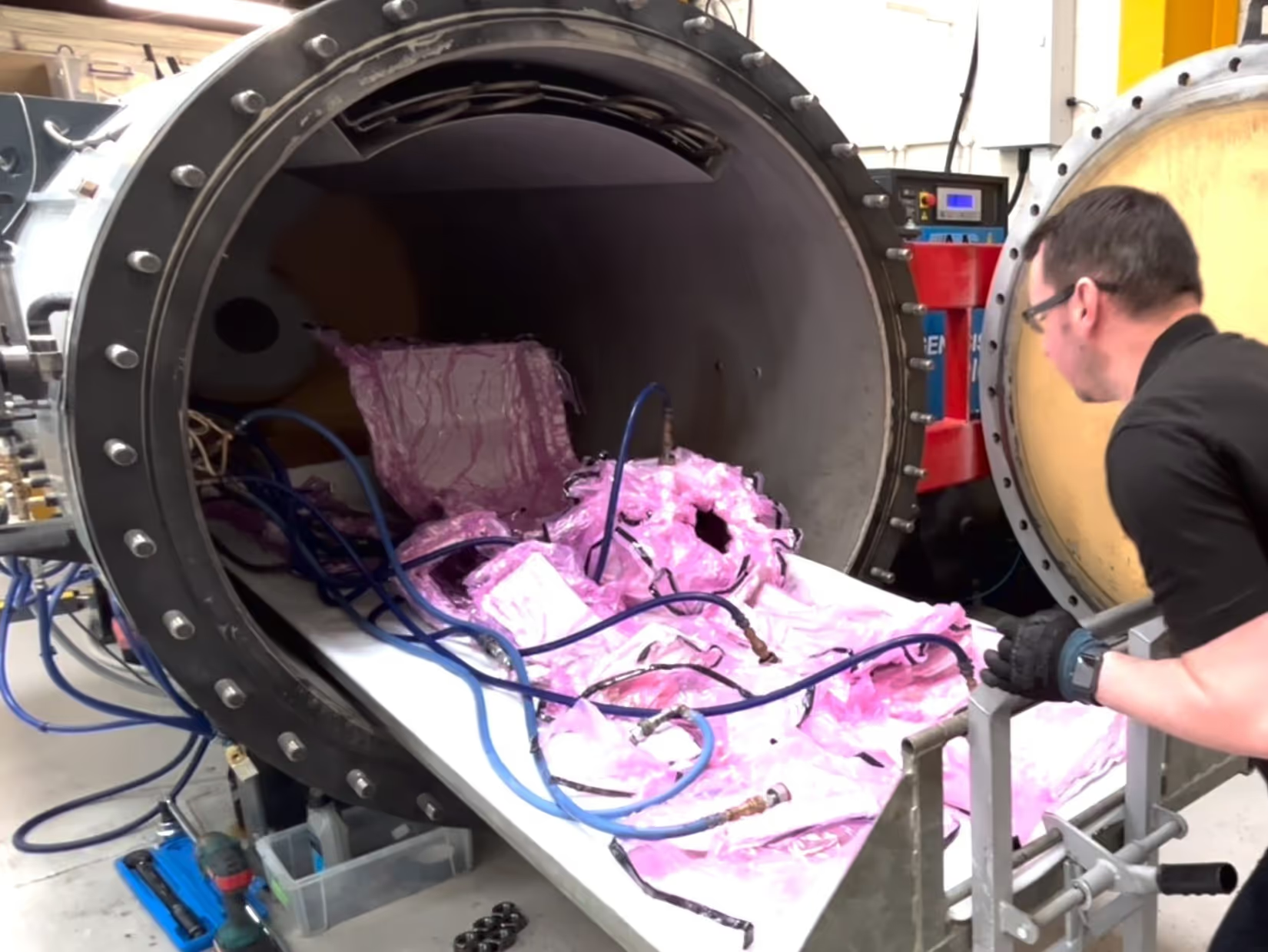
The numbers behind it are not subtle. Pre-preg parts run a fibre volume of 55 to 65%, against 40 to 55% for wet lay. Laminate properties come out 10 to 20% better at lower weight. It is the same pairing of materials and process behind a Formula 1 tub.
Almost nobody in the aftermarket works this way, and the reason is cost. Pre-preg needs freezer storage before it is used. Autoclaves are expensive and slow. The tooling has to survive the cure cycle, so cheap moulds are out. Wet lay-up needs none of that, which is why it remains the default for cosmetic carbon.
Porsche does the equivalent on its own carbon. Its braided carbon wheel is impregnated with resin, pre-hardened at high pressure and high temperature, then cured again and lacquered. Nobody brushes resin onto a Porsche wheel.
It is the standard we hold every part to, and the reason our carbon fibre car parts are made in the UK rather than bought in.
Start with the listing. Look for two words: pre-preg and autoclave. If a seller uses neither and will not answer when asked, the part is probably wet laid or carbon-look. Then ask what sits behind the visible face, and compare the stated weight against the factory part.
Ask for a photograph of the reverse before you order. A moulded carbon part looks like carbon on the back, often with a rougher finish where it left the mould. A skinned part shows a different material underneath. Sellers who make the part will send the photo. Sellers who resell it often cannot.
Then three checks once the part is in front of you.
Tilt it under one light and move it. Real weave shifts, deepens and catches differently as the angle changes. A printed dip stays flat no matter how you turn it. That takes a second and it is the most reliable test there is.
Look at the edges and the back. A moulded part has a clean edge and a finished reverse. A wrapped one has a seam where the film turns the corner, and a base colour underneath it.
Pick it up. Weight is the honest answer. If a seller will not publish a weight, that is information as well.
Weave is not decoration. 2x2 twill runs over two threads and under two, which lets it bend round tight curves without bridging or wrinkling. That is why 3K 2x2 twill is the standard the automotive world settled on.
It matters more on a Porsche than on most cars, because Porsche already puts carbon on the car. On a 911 GT3 the mirror upper shells, mirror triangles and airblades come in high-gloss carbon weave from the factory. Add an aftermarket part in a different weave and the two sit within a metre of each other on the same flank.
Get it wrong and it reads as wrong, even to people who could not tell you why. Our carbon door triangles sit directly behind the mirror for that reason, matched to the weave Porsche uses on its own panels.
Weave has to be consistent within a part as well. Cloth laid badly around a curve leaves the pattern stretched or doubled where it bridges, and once you have seen it you cannot unsee it. Drape is why twill gets used. Drape is also the thing that goes wrong when a part is rushed.
The same logic runs across a whole car. If you are doing several parts, doing them together in one full carbon package is the only way to be sure they came off the same cloth.
Yes, in two places. Vinyl wrap on interior trim is cheap, reversible and harms nothing. Clear film over a real carbon part is protection rather than pretence. What cosmetic carbon will not do is save weight, add stiffness or hold its own next to factory carbon in daylight.
We would rather say that than pretend otherwise. A wrapped interior panel on a daily car is a sensible piece of money. Wrap gets used over real carbon too, as a sacrificial layer.
The problem is not wrap. It is wrap sold at carbon prices, on a listing that says carbon fibre and never says what the part is made of. Judge cosmetic carbon as paint. Pay paint money for it.
One more thing worth knowing either way. Sunlight attacks the resin and the lacquer, not the fibres. Photo-oxidation breaks down the clear coat first, which is why finish quality decides how a part looks in five years.
Here is the version we work to.
The part replaces a factory component. It uses the factory mounting points. No cutting, no drilling, no permanent bonding. It comes off as fast as it went on, so a car can wear it all summer and go back to standard before it is sold. That last point matters more than owners expect on a 911.
The material is autoclave-cured pre-preg carbon, hand-built in the UK, in a 2x2 twill matched to the weave Porsche uses on its own mirrors and roof panels. Nothing underneath but carbon.
Porsche builds whole cars on the same thinking. The GT3 RS gets down to 1,450 kg unladen through consistent use of carbon fibre reinforced plastic across the bonnet, roof, doors and wing. We make a smaller number of parts to the same idea.
Parts in stock go out quickly. Parts built to order are dispatched within 14 to 35 days.
Three things to take away. The process belongs on the product page, so if pre-preg and autoclave are missing, ask why. The weave has to match the carbon already on your car, which rules out most of what is sold generically. And reversibility is the line between an upgrade and a commitment.
None of it is as complicated as the industry needs you to believe. Read the listing properly, weigh the part, tilt it under a light. Three checks and you will know.
The 992.1 mini ducktail is where most owners start.

A GT wing works the air above the car, a ducktail changes where it leaves. What each does, what fits, and which suits your Porsche.
Read article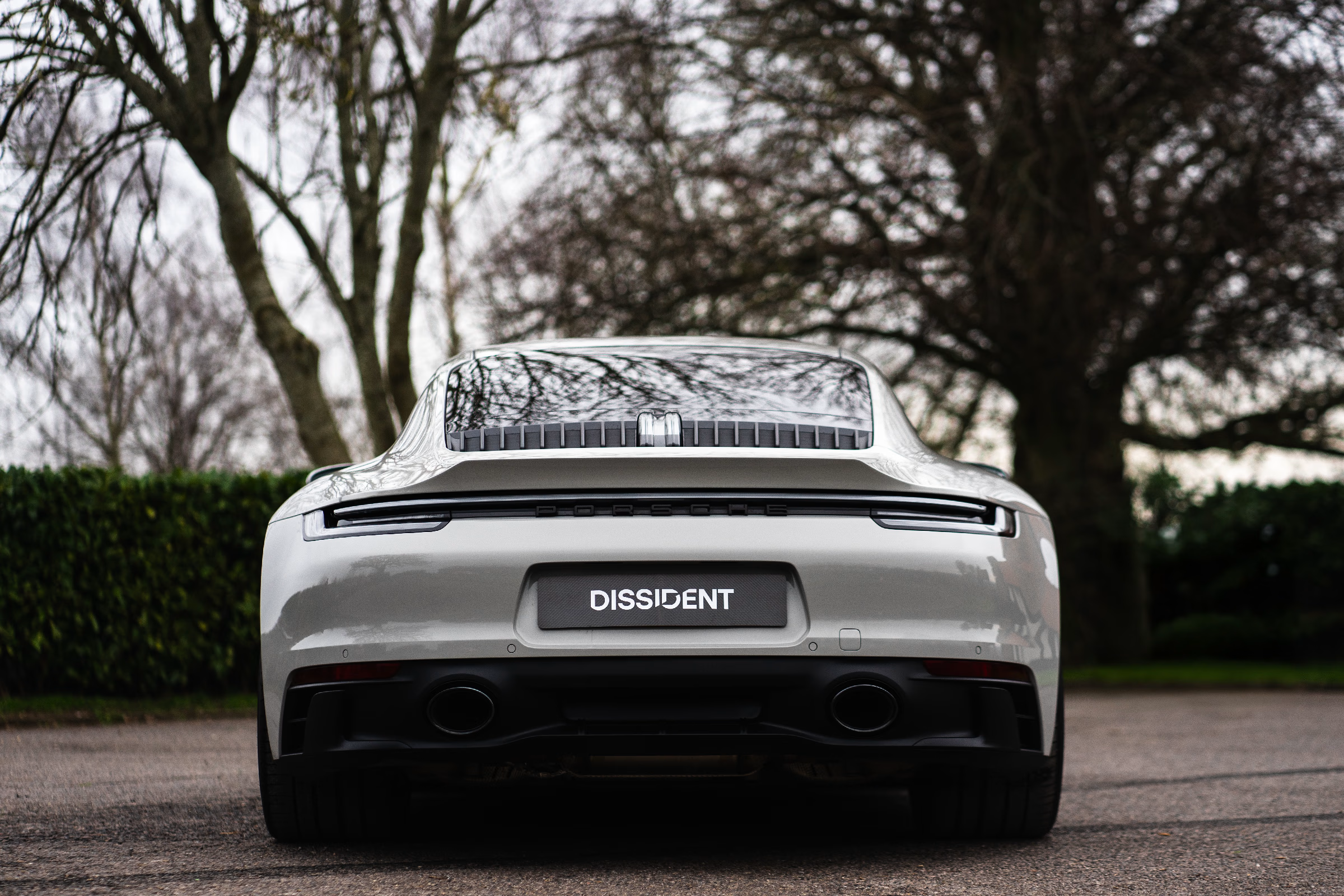
The ducktail spoiler started as a fix for 911 lift in 1972. Where it came from, what it changed, and why it still suits a modern 911.
Read article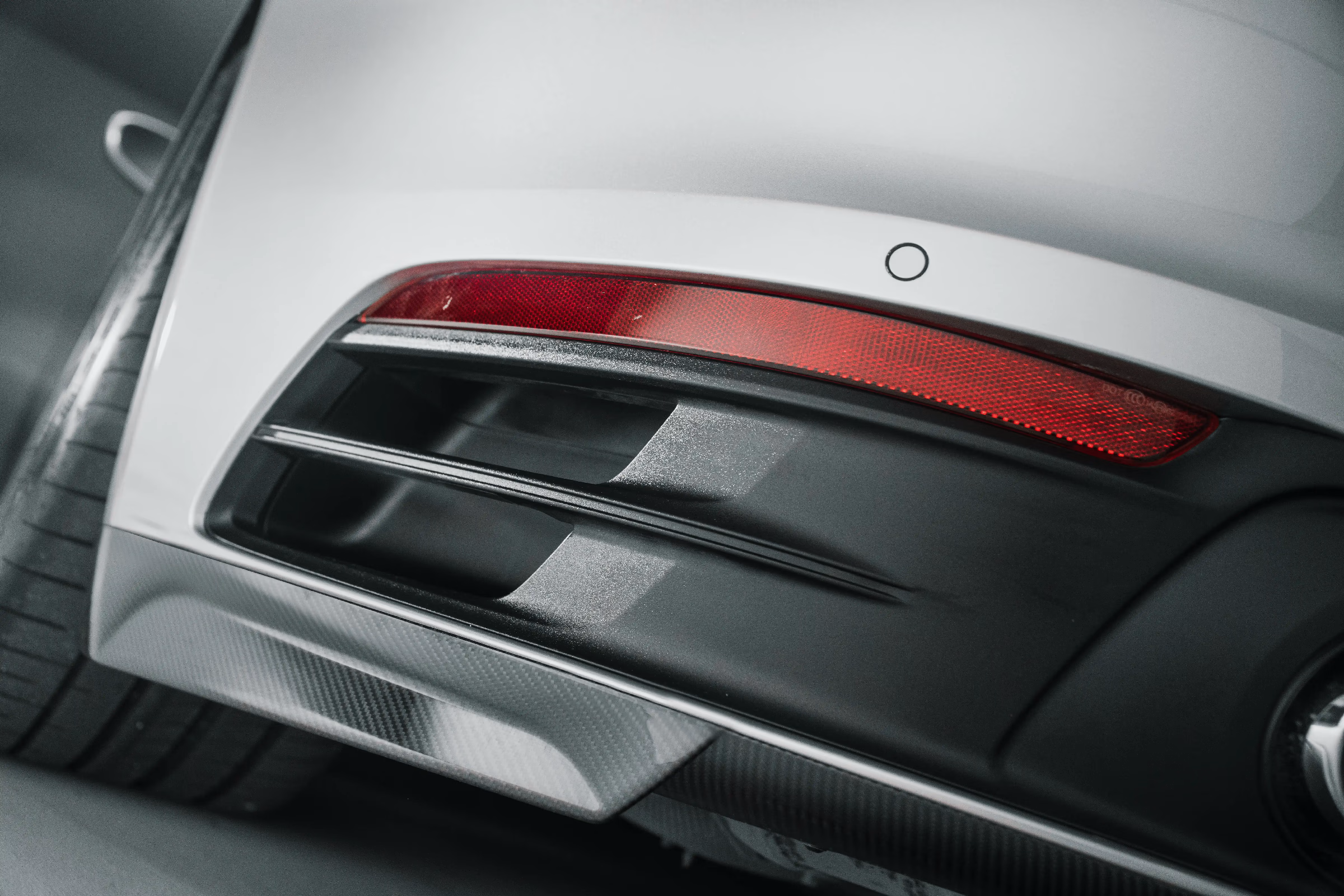
How a rear diffuser works, why most aftermarket ones do little, what to check before buying, and which one fits your Porsche bumper.
Read articleOEM+ means the part looks and fits like something the factory could have made. On carbon it should mean a direct replacement for an original component, using the original mounting points, in a finish that matches the carbon already on the car. The badge carries no weight on its own. It only means something if the seller states the material and the curing process.
Yes, for a body part. Pre-preg cloth arrives with the resin already measured into it, so the ratio is controlled rather than brushed on by hand. Cured in an autoclave under heat and pressure, it comes out lighter, stiffer and with far fewer voids than wet laid carbon. Wet lay-up is cheaper, which is why most cosmetic aftermarket carbon uses it.
Check the listing first for the words pre-preg and autoclave, and ask what sits behind the visible surface. When the part arrives, tilt it under a single light: real weave shifts and gains depth as the angle changes, while a printed dip stays flat. Then compare the weight against the factory part it replaces. A carbon panel that weighs the same or more is not carbon.
The fibres do not, but the resin and lacquer over them can. Sunlight breaks down the clear coat first, which dulls the surface and eventually lets the resin underneath discolour. A properly lacquered or painted part holds its finish for years. Thin gel coats on budget parts are where most yellowing comes from.
Not usually. Most parts come finished in gloss lacquered visual carbon, bare carbon, primer or gloss black. Some items, including painted ducktails and carbon packs, can be finished in a Porsche paint code instead. If you buy in primer and arrange paint locally, use a body shop with experience of painting carbon.